Skip to content
All tool news

Tool desk · Updated daily

Tool news·ChatGPT·

ChatGPT Images 2.0 Adds Web Search and Self-Checking to Image Generation.

ChatGPT Images 2.0 brings real-time web search, multi-image generation from single prompts, and self-verification to OpenAI's image model.

CW

Create With tool desk

1 source checked · 2 min read · 3 sections

ShareLinkedIn

OpenAI has rolled out ChatGPT Images 2.0, marking what the company calls its first image generation model with thinking capabilities. Announced on LinkedIn, the update brings three core improvements: real-time web search integration, the ability to generate multiple distinct images from a single prompt, and a self-checking mechanism that verifies outputs before delivery.

The update represents a shift in how ChatGPT approaches image generation. Rather than treating image creation as a single-step process, the model now incorporates reasoning steps that allow it to search for current information, generate variations, and validate results.

Web Search Meets Image Generation

The integration of real-time web search allows the model to pull current information before generating images. For professionals creating content that requires up-to-date visual references, such as product mockups incorporating recent branding changes or event graphics reflecting current trends, this could reduce the back-and-forth typically required to get accurate outputs.

The multi-image capability addresses a common workflow pain point. Instead of generating one image, reviewing it, and requesting another if unsatisfied, users can now receive multiple distinct interpretations from a single prompt. This is particularly relevant for designers and marketers who need to present options to clients or stakeholders.

Self-Verification Layer

The self-checking feature is perhaps the most technically interesting addition. The model now includes a verification step where it reviews its own output against the original prompt before delivery. While OpenAI hasn't detailed the exact mechanism, this suggests the model can identify common failure modes, such as missing elements or inconsistencies, before the user sees them.

This follows OpenAI's broader push to add reasoning capabilities across its product line, as seen in recent updates to voice infrastructure and API offerings.

The company shared five case studies showing how professionals are using the new model, though specific examples weren't detailed in the announcement. The focus appears to be on professional use cases rather than casual generation, positioning Images 2.0 as a tool for workflows where accuracy and variation matter.

Availability and Access

Based on the LinkedIn post's mention of "pro users," the feature appears to be rolling out to ChatGPT Plus, Team, or Enterprise subscribers first. OpenAI hasn't specified whether the update will reach free-tier users or remain a paid feature.

For creators already using tools like Midjourney or integrated AI features in platforms like Canva, Images 2.0 offers a different approach: trading pure aesthetic control for context-aware generation that can reference current information and self-correct.

The update arrives as competition in AI image generation continues to intensify. While OpenAI's DALL-E has been foundational in the space, newer models from Anthropic, Google, and specialized image generation startups have pushed capabilities forward. The thinking-first approach suggests OpenAI is betting that accuracy and reliability, rather than just visual quality, will differentiate its offering.

Users can access ChatGPT Images 2.0 through the standard ChatGPT interface at chatgpt.com. The company has published usage tips and professional examples, though the full blog post wasn't accessible at the time of writing.

Sources

1 checked

How we cover tool news: Create With's tool desk drafts these reports with AI from the sources listed above and checks them against those sources before publishing.

Worth passing on?

ShareLinkedIn

Go deeper on ChatGPT

Related reading, watching and going.

Everything on ChatGPT →

The briefing

21 Oct 2026

Stop Asking AI — Build Reusable Scripts to Save Tokens

Discover why asking AI to write small reusable scripts — not one-off replies — saves tokens, improves accuracy and privacy, and makes tools easy to reuse.

Read →

The briefing

13 Oct 2026

Jev - The System One AI That Never Writes a Word, Explained

Deep dive into Jev - TypeSafe's 'System One' model that outputs decisions, not text. Read how it works, real demos (driving), what it's good for and its limits.

Read →

The briefing

30 Sept 2026

Solo Consultant's AI Operating System Built on Markdown

London solo consultant uses an AI personal OS of markdown files—saving ~45% delivery time, boosting revenue 2.4×, and powering 33 community events for ~£250/mo.

Read →
36 min

Podcast

55. We're Back! Conference Recap, Running Events with AI & Self-Healing Apps

James and Kieran return to the Create With Podcast after their summer break to recap the 2026 Create With Conference in Brighton. They discuss how 550 attendees experienced workshops, a charity hackathon where functional apps were built in 30 minutes, and an innovative conference operating system built entirely with AI. The episode covers the latest developments in AI development tools including Anthropic's Fable model, scheduled tasks in Codex, and self-healing applications using PostHog.

Watch now ↗
31 min

Conference

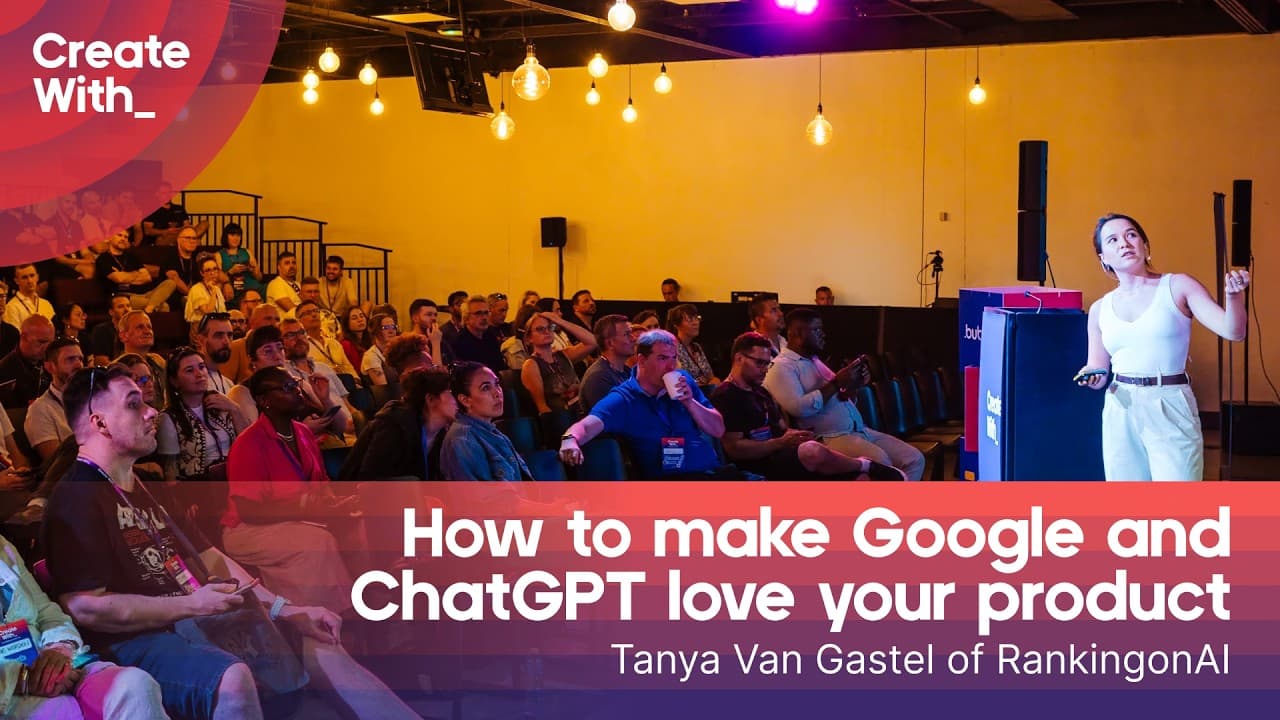
How to Get Your Product Recommended by Google and ChatGPT

Tanya Van Gastel presents the APEX framework for making products discoverable in AI-powered search engines like ChatGPT and Google's AI Overviews. She explains how AI is fundamentally changing product discovery and buyer behavior, then breaks down five critical components: Authority (being cited as a solution), Presence (visibility across search platforms), Expertise (creating high-quality money pages), Endorsements (off-site validation), and Extractability (making content easy for AI to process). The talk emphasizes quality over quantity, with data showing 50% of SaaS SEO revenue comes from fewer than 10 high-performing pages.

Watch now ↗
35 min

Conference

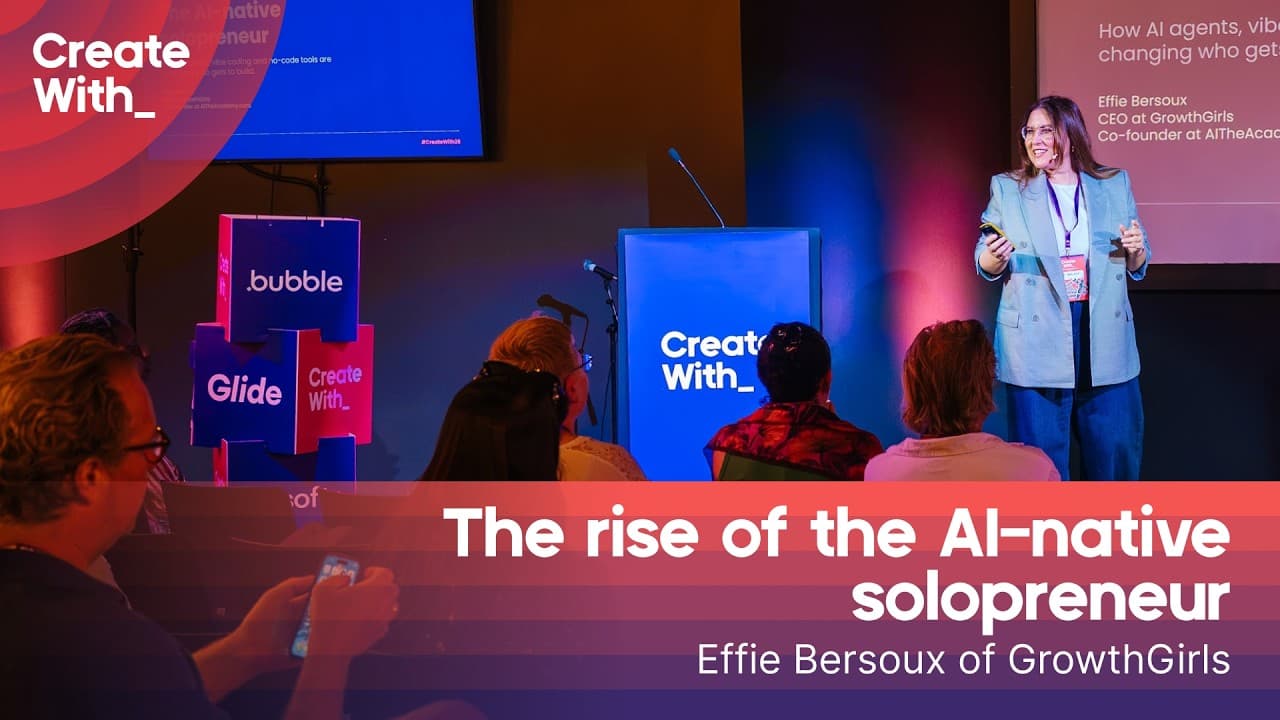
The AI-Native Solopreneur: Build Without a Technical Co-Founder

Effie Bersoux presents a paradigm shift in entrepreneurship where AI enables solo founders to build, validate, and scale businesses without technical co-founders or significant capital. Drawing from Growth Girls' experience building 40+ companies in one year and going from a £4m exit (7 years) to a £40m acquisition target (1 year), she demonstrates how AI breaks the traditional capital-talent-traction loop that disadvantages undercapitalized founders. The talk provides concrete frameworks for AI-native operating models, automation decision-making, and rapid idea-to-market validation.

Watch now ↗

Latest tool news

What else changed this week.

All tool news
VercelDigest

What Vercel Shipped in Late October

Vercel shipped quicker static deployments, four AI Gateway models, more free domain choices and new CLI controls in late October. The changes cover developers testing sites…

Vercel

Vercel Adds Submit_feedback to Its MCP

submitfeedback is a new Vercel MCP tool that lets agents and harnesses send bug reports, friction reports and feature requests directly to the Vercel team. Feedback can include…

The Create With Briefing

Don't watch forty changelogs. Read one email.

Every Tuesday: the tool changes worth knowing, real business use cases, and what's on near you. Free, unsubscribe any time.