Skip to content
Conference

How to Get Your Product Recommended by Google and ChatGPT

Create With30:12147 views

Summary

Tanya Van Gastel presents the APEX framework for making products discoverable in AI-powered search engines like ChatGPT and Google's AI Overviews. She explains how AI is fundamentally changing product discovery and buyer behavior, then breaks down five critical components: Authority (being cited as a solution), Presence (visibility across search platforms), Expertise (creating high-quality money pages), Endorsements (off-site validation), and Extractability (making content easy for AI to process). The talk emphasizes quality over quantity, with data showing 50% of SaaS SEO revenue comes from fewer than 10 high-performing pages.

What You'll Learn

How AI Search Is Transforming Product Discovery

The way customers find and evaluate products has fundamentally changed. When someone has a problem today, they're opening multiple AI tools simultaneously—ChatGPT, Claude, Perplexity—and asking the same question across all of them to see what answers emerge. This shift represents a massive opportunity for SaaS products that understand how to position themselves in AI-powered search results.

Tanya Van Gastel, founder of RankingOnAI.com, works with high-growth SaaS companies like Suno and Coda to drive visibility in both traditional search and AI recommendation engines. Her APEX framework provides a practical roadmap for getting your product recommended by ChatGPT and featured in Google's AI Overviews.

Understanding How AI Search Actually Works

When you ask ChatGPT for a product recommendation, it doesn't invent answers from nothing. The AI retrieves information from indexed sources, summarizes that content, and presents recommendations based on what it finds. You can see this in action by scrolling to the "sources" section below any ChatGPT response—those citations reveal exactly where the AI pulled its information.

This creates a clear pathway for visibility: if you want AI to recommend your product, you need to be present in the authoritative sources that AI systems index and cite. The good news? There's significant overlap with traditional SEO. Research shows 88% of ChatGPT citations come directly from Google's search index, and there's a 38% overlap between first-page Google results and AI source citations.

The APEX Framework for AI Visibility

Authority: Building Your Foundation

Authority means appearing as the solution when someone asks for help solving a specific problem. The most effective approach is creating high-quality listicles that AI models read and cite. Zapier demonstrates this perfectly with articles like "The 9 Best Marketing Automation Tools in 2025"—and naturally, Zapier appears as the top recommendation in their own comprehensive comparison.

These aren't spam pages. They're genuinely useful resources that compare solutions, explain tradeoffs, and help readers make informed decisions. The key is providing real value while positioning your product as a legitimate contender.

Presence: Focusing on Quality Over Quantity

Presence means being discoverable across both AI search and traditional Google search. Here's a crucial insight: about 50% of SaaS SEO revenue comes from fewer than 10 high-performing pages. These "money pages" or "whales" drive the bulk of traffic and conversions.

Ahrefs provides a compelling case study. Their blog traffic from Google grew from zero to 9,000 clicks through focused, high-quality content—not mass-produced AI spam. This demonstrates that good traditional SEO remains the foundation for AI visibility.

Google still drives approximately 200 times more traffic than ChatGPT, and critically, that traffic is attributable in your analytics. ChatGPT recommendations rarely include clickable links, and when they do, users don't always click. Often they copy the tool name and Google it separately, making attribution nearly impossible.

Expertise: Creating Money Pages That Convert

Your expertise shows through in specialized, product-focused content that competitors can't easily replicate. Notion exemplifies this with their product-led SEO approach, creating detailed guides on specific use cases like project management, documentation systems, and team collaboration—all demonstrating Notion's capabilities.

Zapier takes a similar approach with workflow-specific content, showing exactly how to automate particular processes using their platform. This content serves dual purposes: it ranks for specific search queries while simultaneously demonstrating product value to potential customers.

The AI Content Question

Many founders wonder if they can simply generate hundreds of pages with AI and achieve SEO success. The answer is nuanced: AI doesn't lower the content quality floor—it raises the ceiling for what's possible with human-AI collaboration.

If you publish 500 AI-generated articles that anyone with a ChatGPT subscription could create, you're not adding unique value. Google may not index these pages, and in extreme cases, might classify your entire site as spam. The algorithmic risk is real.

Instead, use AI as a force multiplier for creating genuinely unique content. Take your meeting recordings from tools like Granola or Fireflies, export your internal documentation, and use AI to help structure and refine content that only your company could produce. The best performing content is human-written with AI support, particularly for tasks like creating comparison tables, structuring complex information, and ensuring clarity.

Endorsements: Leveraging External Validation

While the talk didn't fully explore this component in the excerpt, endorsements refer to third-party validation and citations. When authoritative sites mention or review your product, those signals contribute to your overall AI visibility. This is why PR, partnership content, and customer case studies on external sites matter for discoverability.

Extractability: Making Content AI-Readable

Extractability means structuring your content so AI systems can easily parse, understand, and cite it. This includes using clear headings, structured data, and the BLUF principle (Bottom Line Up Front)—leading with key information rather than burying it in lengthy introductions.

Practical Implementation Strategy

Start by identifying your potential money pages—the 5-10 topics most relevant to your ideal customers' search behavior. Research what currently ranks for these queries and what ChatGPT cites when asked similar questions.

Create comprehensive, genuinely helpful content that goes beyond surface-level information. Include:

  • Detailed comparisons with honest tradeoffs
  • Specific use cases with step-by-step guidance
  • Real examples and data from your product experience
  • Clear structure that's easy for both humans and AI to parse

Publish thoughtfully rather than in bulk. Quality and uniqueness matter far more than volume. Each piece should provide value that generic AI-generated content cannot match.

Monitor your results through traditional SEO metrics while staying aware that AI recommendation traffic may not appear in your analytics. Success in AI visibility often manifests as increased branded search volume and direct traffic as users discover your product through AI recommendations then search for you directly.

The Future of Product Discovery

AI-powered search represents a fundamental shift in how customers discover solutions, but it builds on established SEO principles rather than replacing them. The companies that will win in this new landscape are those creating genuinely valuable content that serves human needs while being structured for AI comprehension.

The APEX framework provides a clear path forward: build authority through quality content, establish presence across search platforms, demonstrate expertise with unique insights, gather external endorsements, and ensure your content is easily extractable by AI systems. Focus on the money pages that drive real results rather than chasing vanity metrics through content volume.

As AI search continues evolving, the fundamentals remain: create something useful, make it discoverable, and ensure it provides value that generic alternatives cannot match.


Key Learnings

1ChatGPT citations are 88% derived from Google's search index

AI recommendations aren't generated from thin air—they come from indexed web content. This means traditional SEO remains foundational to AI visibility, with 38% overlap between first-page Google results and ChatGPT source citations.

Learn more about ChatGPT

250% of SaaS SEO revenue comes from fewer than 10 high-performing pages

Quality dramatically outperforms quantity in search visibility. Instead of mass-producing content, successful SaaS companies identify their 'money pages' or 'whales' that drive the bulk of traffic and conversions, then invest heavily in making those exceptional.

3AI-generated content risks deindexing if it lacks unique value

Publishing hundreds of generic AI-generated articles can result in none of them being indexed, and may cause Google to classify your entire site as spam. Content must be unique and valuable—something only your company could create based on your specific expertise and data.

Learn more about ChatGPT

4Google drives 200x more attributable traffic than ChatGPT

While AI recommendations are valuable, ChatGPT rarely provides clickable links and conversions aren't trackable in analytics. Google search remains the dominant traffic source with clear attribution, making traditional SEO metrics more reliable for justifying marketing spend.

Learn more about ChatGPT

5Product-led SEO creates compound value through use case content

Notion's approach of creating detailed guides for specific use cases (project management, documentation, team collaboration) serves dual purposes: ranking for relevant searches while simultaneously demonstrating product capabilities to potential customers.

Learn more about Notion

6Strategic listicles position your product as an authoritative solution

Creating comprehensive comparison content like 'Best [Category] Tools' allows you to legitimately position your product as a top solution while providing genuine value. Zapier's marketing automation tool comparison demonstrates this by ranking their own product first with justified reasoning.

Learn more about Zapier

7The BLUF principle improves AI extractability

Bottom Line Up Front formatting—leading with key information rather than lengthy introductions—makes content easier for AI systems to parse and cite. Combined with clear headings and structured data, this increases the likelihood of being featured in AI responses.

Resources Mentioned

RankingOnAI.com - AI Visibility Agency

Tanya Van Gastel's agency specializing in SEO and AI visibility strategy for high-growth SaaS companies, with case studies from clients like Suno and Coda.

Visit

ChatGPT by OpenAI

The AI assistant changing product discovery, with citation features that reveal which sources it indexes for recommendations.

Visit

Ahrefs Blog SEO Case Study

Example of quality-focused SEO that grew from zero to 9,000+ monthly clicks through strategic content, demonstrating the APEX framework in action.

Visit

Notion Template Gallery

Product-led SEO in practice, with use case-specific content that ranks for searches while demonstrating product capabilities.

Visit

Zapier Blog and Comparisons

Strategic listicles and workflow automation guides that establish authority while positioning Zapier as the solution to user problems.

Visit

Create With Community

Join the Create With community for ongoing discussions about AI-powered growth strategies, SEO best practices, and tool recommendations.

Visit

Frequently Asked Questions

Should I use AI to generate all my SEO content?

No. While AI is valuable for supporting content creation, mass-producing generic AI-generated articles risks deindexing and can cause Google to classify your site as spam. Instead, use AI to enhance human-created content that's unique to your business—like turning meeting transcripts, internal documentation, and product expertise into structured articles. The best performing content is human-written with AI assistance for tasks like creating tables, structuring information, and improving clarity.

Why does ChatGPT recommend certain products over others?

ChatGPT doesn't invent recommendations—it retrieves information from indexed sources (88% from Google's search index), summarizes that content, and presents answers based on what authoritative sources say. You can see exactly which sources ChatGPT used by checking the citations section below any response. To get recommended, you need to appear in the high-quality content that AI systems index and cite.

Is traditional SEO still important if AI search is growing?

Absolutely. Google still drives approximately 200 times more traffic than ChatGPT, and crucially, that traffic is attributable in your analytics. ChatGPT recommendations often don't include clickable links, and when they do, users frequently copy the product name and Google it separately. Good traditional SEO is the foundation for AI visibility, with 38% overlap between first-page Google results and ChatGPT citations.

How many content pages do I need to rank well?

Quality matters far more than quantity. Research shows about 50% of SaaS SEO revenue comes from fewer than 10 high-performing 'money pages.' Instead of creating hundreds of mediocre articles, identify the 5-10 topics most relevant to your ideal customers and create exceptionally comprehensive, valuable content for those areas. Tools like Notion and Zapier demonstrate this approach successfully.

What makes content 'extractable' for AI systems?

Extractable content is structured so AI can easily parse and cite it. This includes using clear hierarchical headings, implementing the BLUF principle (Bottom Line Up Front—leading with key information), adding structured data markup, and organizing information in scannable formats like tables and bullet points. The goal is making it effortless for AI to understand your main points and quote them accurately.

More content like this

Never miss a video

Get weekly updates on the best AI tutorials, conference recordings, and community content.

Keep Watching

Related Videos

View all videos
55. We're Back! Conference Recap, Running Events with AI & Self-Healing Apps
Podcast35:53

55. We're Back! Conference Recap, Running Events with AI & Self-Healing Apps

James and Kieran return to the Create With Podcast after their summer break to recap the 2026 Create With Conference in Brighton. They discuss how 550 attendees experienced workshops, a charity hackathon where functional apps were built in 30 minutes, and an innovative conference operating system built entirely with AI. The episode covers the latest developments in AI development tools including Anthropic's Fable model, scheduled tasks in Codex, and self-healing applications using PostHog.

The Biggest AI Opportunities for Non-Technical Builders in 2026
Conference38:09

The Biggest AI Opportunities for Non-Technical Builders in 2026

A closing panel discussion from Create With featuring leaders from Glide, Softr, Bubble, Momen, and TechFoundHer examining how AI and no-code platforms are democratizing software development. The panelists explore what non-technical builders can now create, how AI is transforming service businesses, and where expertise still matters when prototypes become production applications.

Everyone Can Build with AI. What Should Companies Do Next?
Conference29:07

Everyone Can Build with AI. What Should Companies Do Next?

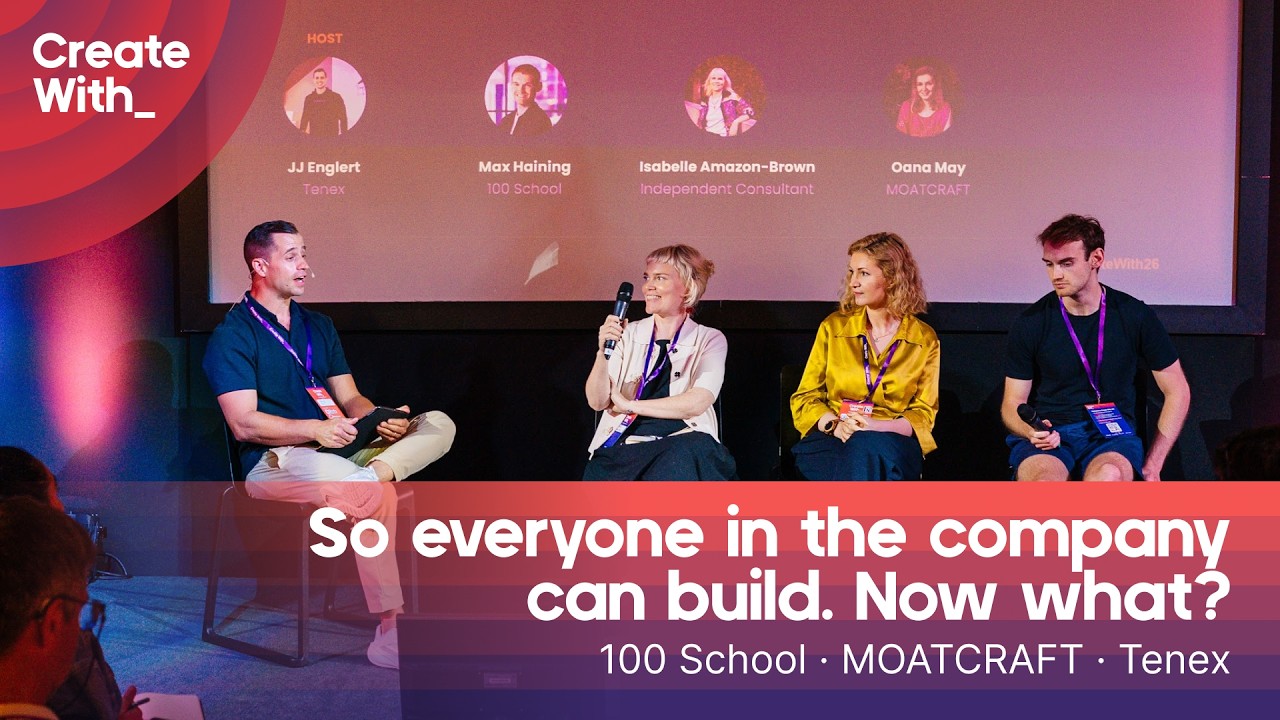
A leadership panel from Create With conference exploring how companies should approach AI adoption when building tools becomes accessible to everyone. Four experts debate the gap between technical capability and strategic judgment, discussing governance frameworks, safe experimentation, product sense development, and organizational learning pathways for AI transformation.

Inside a 60-Skill Claude Code System Running AI Agents in Parallel
Conference35:21

Inside a 60-Skill Claude Code System Running AI Agents in Parallel

Stephany Oliveros, CEO of Lyra AI, presents a production-ready Claude Code architecture for running dozens of AI agents in parallel. She demonstrates a 60-skill system built on progressive disclosure, layered memory, and reusable components that enable coordinated multi-agent workflows without burning through tokens. The talk covers practical folder structures, guardrails, and token economics for building scalable agentic systems.

The AI-Native Solopreneur: Build Without a Technical Co-Founder
Conference34:21

The AI-Native Solopreneur: Build Without a Technical Co-Founder

Effie Bersoux presents a paradigm shift in entrepreneurship where AI enables solo founders to build, validate, and scale businesses without technical co-founders or significant capital. Drawing from Growth Girls' experience building 40+ companies in one year and going from a £4m exit (7 years) to a £40m acquisition target (1 year), she demonstrates how AI breaks the traditional capital-talent-traction loop that disadvantages undercapitalized founders. The talk provides concrete frameworks for AI-native operating models, automation decision-making, and rapid idea-to-market validation.

AI Lets You Build Everything—Here’s Why You Still Never Launch
Conference28:15

AI Lets You Build Everything—Here’s Why You Still Never Launch

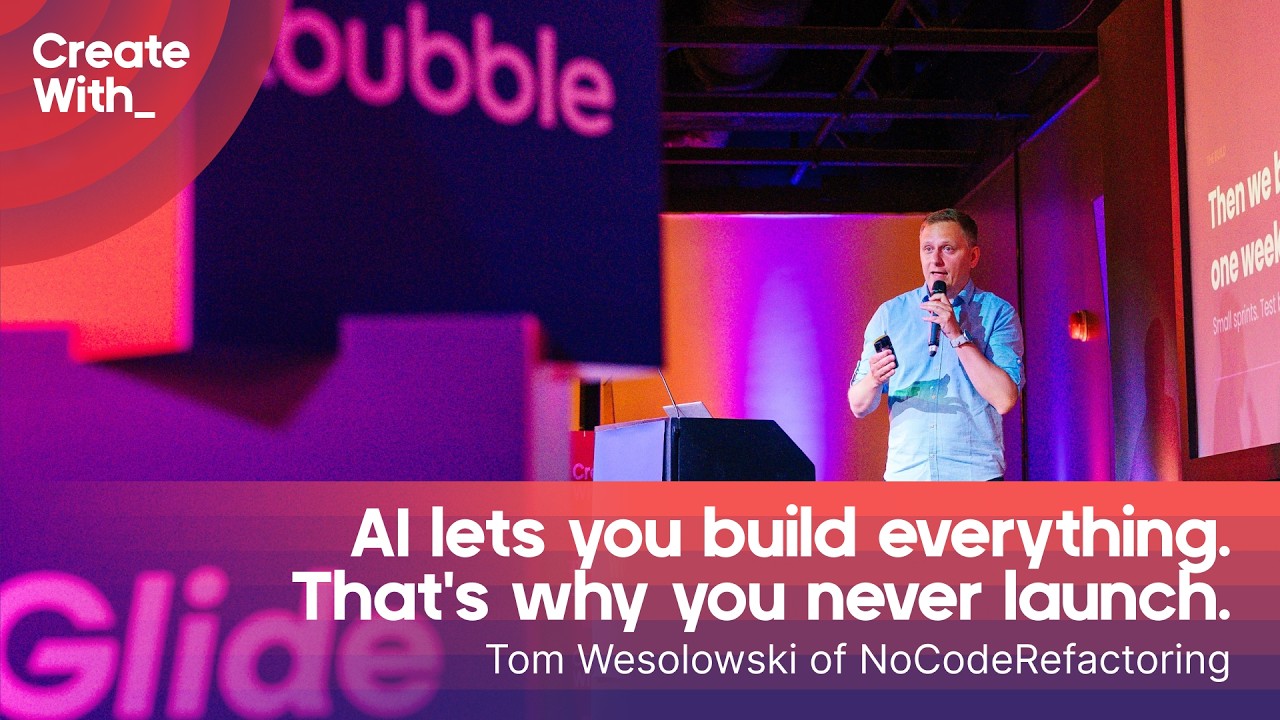
Tom Wesolowski, owner of NoCodeRefactoring.com, delivers a conference talk exposing how AI's ability to build anything has created a new problem: chronic overbuilding that prevents launches. Using a real marketplace project as a case study, he demonstrates how an 80% scope reduction transformed a stalled four-month development into a revenue-generating product launched in two weeks. The talk provides a practical framework for identifying the minimal viable customer loop and postponing everything else until real user demand validates the need.