Netlify

Netlify has shipped a feature that collapses the distance between describing an idea and deploying it to production infrastructure. Users can now start a project at netlify.new by typing what they want to build, selecting an AI agent, and receiving a live URL within minutes.
The workflow eliminates the traditional setup phase. Type a prompt, pick from Claude Code, Gemini CLI, or Codex, and the chosen agent generates a working project deployed on Netlify's production infrastructure. There's no migration step when the prototype becomes real, according to the company's LinkedIn announcement.
Agent Runners Handle Generation and Deployment
Netlify calls the underlying system Agent Runners. The platform orchestrates the AI agent's work, handles the build process, and provisions production hosting in one pass. Users iterate on the same project in place rather than starting over or moving between environments.
The three agent options operate differently. Claude Code focuses on structured code generation. Gemini CLI emphasizes command-line workflows. Codex targets general web applications. All three produce deployable projects with functional URLs.
This follows Netlify's broader repositioning around what the company calls Agent Experience, treating AI agents as first-class users of the platform rather than tools for human developers. The prompt-to-production feature extends that philosophy to project creation.
Production Infrastructure From the Start
The generated projects run on Netlify's standard production stack: global CDN, serverless functions, automatic HTTPS, and deploy previews. Users can add custom domains, forms, password protection, and other features through the dashboard after deployment.
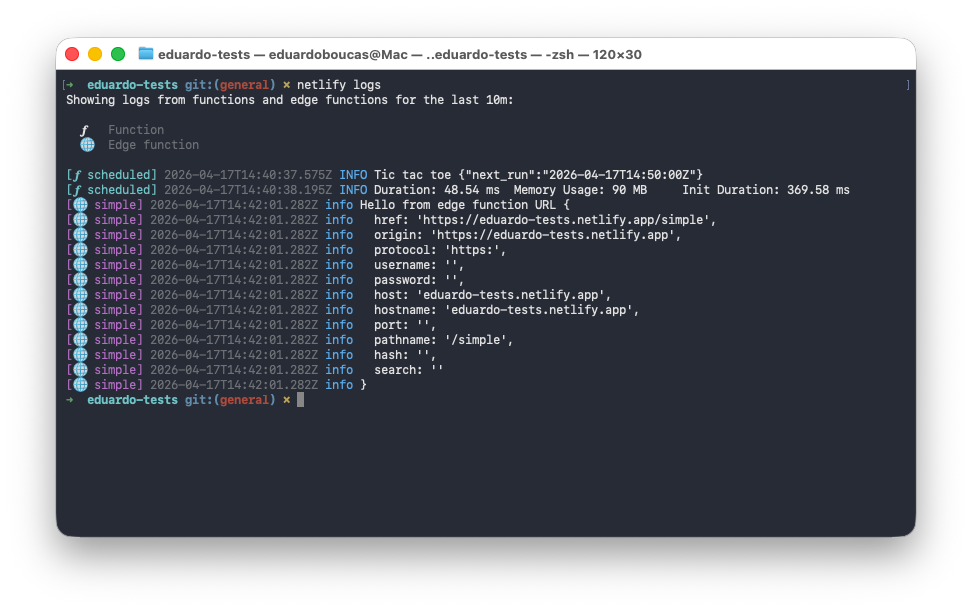
Netlify recently shipped a netlify logs CLI command that provides structured access to function, edge function, and deploy logs. The JSON Lines output format works well with AI agents processing log data, which aligns with the platform's agent-first direction.
The prompt-to-production workflow complements Netlify's Stripe Projects integration, which similarly aims to reduce friction between idea and deployed application. Both features target builders who want to move quickly from concept to working software.
Iteration Without Rewriting
The system preserves the project structure as users refine it. Subsequent prompts modify the existing codebase rather than generating a new project from scratch. This approach maintains git history, deployed URLs, and any custom configuration added after the initial generation.
Netlify has not disclosed technical details about how Agent Runners coordinate between the AI models and the build infrastructure, or how the system handles dependencies, framework selection, or runtime constraints. The feature is live at netlify.new for all users.
The launch represents a significant compression of the deployment timeline. Traditional workflows involve repository setup, framework configuration, build pipeline creation, and hosting provisioning as separate steps. Netlify's approach bundles these into a single prompt interaction, betting that many projects no longer need that granularity upfront.
Sources
1 checkedHow we cover tool news: Create With's tool desk drafts these reports with AI from the sources listed above and checks them against those sources before publishing.

 Supabase