Skip to content
All tool news

Tool desk · Updated daily

Tool news·Bubble·

Bubble Brings Native Magic Link Authentication to Mobile Apps.

Bubble announced native magic link login for mobile apps, allowing users to authenticate with email only without passwords or web redirects.

CW

Create With tool desk

1 source checked · 2 min read · 3 sections

ShareLinkedIn
Bubble Brings Native Magic Link Authentication to Mobile Apps

Bubble announced on LinkedIn that magic link login is now fully native to its mobile apps. Users can enter their email, receive a login link, click it, and sign in without entering a password or being redirected through a web view.

The update targets a common friction point in mobile authentication. Traditional magic link implementations often open a browser or web view, forcing users to bounce between contexts before landing back in the app. Bubble's native implementation eliminates that step entirely, keeping the entire flow inside the mobile app.

How It Works

The authentication flow is straightforward. A user enters their email address in the app, receives a login link via email, and taps it. Instead of opening a browser, the link opens directly in the app and completes the authentication. No password is required at any step.

Magic links have become a standard authentication method for consumer apps, particularly those prioritizing mobile-first experiences. They reduce password fatigue and eliminate the need for users to remember credentials or go through password reset flows. For builders using Bubble, the feature is now available as a native option in mobile app builds.

Why It Matters for Bubble Builders

Bubble positions itself as a no-code platform for building SaaS platforms, marketplaces, and CRMs. Many of these use cases depend on smooth mobile authentication, especially for apps with frequent logins or user-generated content.

The native implementation means developers no longer need to rely on plugins or workarounds to achieve passwordless login on mobile. It also aligns with broader mobile UX expectations, where any unnecessary redirect or browser handoff can increase drop-off rates during onboarding.

Bubble has been expanding its mobile capabilities over the past year. The platform previously rolled out improvements to its AI Agent for building mobile-friendly interfaces from design references, and has been steadily closing the gap between its web and mobile feature sets.

Passwordless authentication is becoming table stakes for mobile apps, and no-code platforms are following suit. Tools like Glide and Adalo also support magic link and social logins as core features, reflecting user expectations for streamlined mobile onboarding.

Bubble's implementation is notable because it avoids the web redirect entirely. Many no-code tools still rely on OAuth or external authentication services that require a browser handoff, which can feel clunky on mobile. By making the flow native, Bubble removes a layer of complexity that often requires custom plugin development or API integration.

The feature is now available to Bubble users building mobile apps. The company did not specify whether it is available across all pricing tiers or if it requires a specific plan level. Bubble's mobile app builder is part of its core offering, and most authentication features have historically been available to all users.

Sources

1 checked

How we cover tool news: Create With's tool desk drafts these reports with AI from the sources listed above and checks them against those sources before publishing.

Worth passing on?

ShareLinkedIn

Go deeper on Bubble

Related reading, watching and going.

Everything on Bubble →

The briefing

26 May 2026

Create With Conference 2026: AI Agent Community Event Brighton

Join Create With Conference 2026 in Brighton for insights on AI agents and vibe-coded software. Partnering with EVOLVE for two days of tech innovation.

Read →

The briefing

12 May 2026

The Ultimate Cheap & Scalable Stack for AI Agent Development

Discover the latest AI agent tools and vibe-coded apps from No-Code Poland. Learn about Bubble's AI assistant, Lovable's security standards, and more.

Read →

The briefing

21 Apr 2026

Claude Design vs Figma Make vs Google Stitch: AI Design Tested

We tested Claude Design against Figma Make and Google Stitch to see which AI design tool wins. Plus: Buildprint launches for Bubble, Lovable's security issue, and what's new in vibe coding.

Read →
39 min

Conference

The Biggest AI Opportunities for Non-Technical Builders in 2026

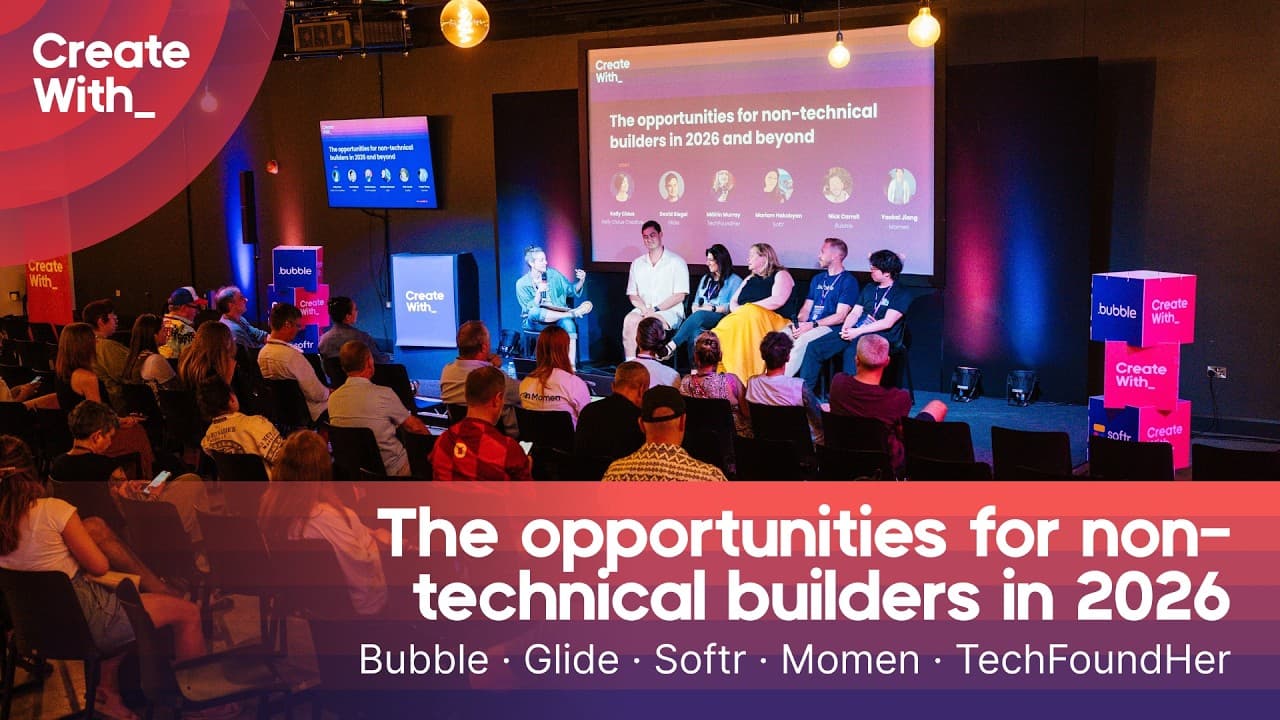
A closing panel discussion from Create With featuring leaders from Glide, Softr, Bubble, Momen, and TechFoundHer examining how AI and no-code platforms are democratizing software development. The panelists explore what non-technical builders can now create, how AI is transforming service businesses, and where expertise still matters when prototypes become production applications.

Watch now ↗
29 min

Conference

AI Lets You Build Everything—Here’s Why You Still Never Launch

Tom Wesolowski, owner of NoCodeRefactoring.com, delivers a conference talk exposing how AI's ability to build anything has created a new problem: chronic overbuilding that prevents launches. Using a real marketplace project as a case study, he demonstrates how an 80% scope reduction transformed a stalled four-month development into a revenue-generating product launched in two weeks. The talk provides a practical framework for identifying the minimal viable customer loop and postponing everything else until real user demand validates the need.

Watch now ↗
21 min

Keynote

How a Non-Technical Founder Learned to Build Anything with AI

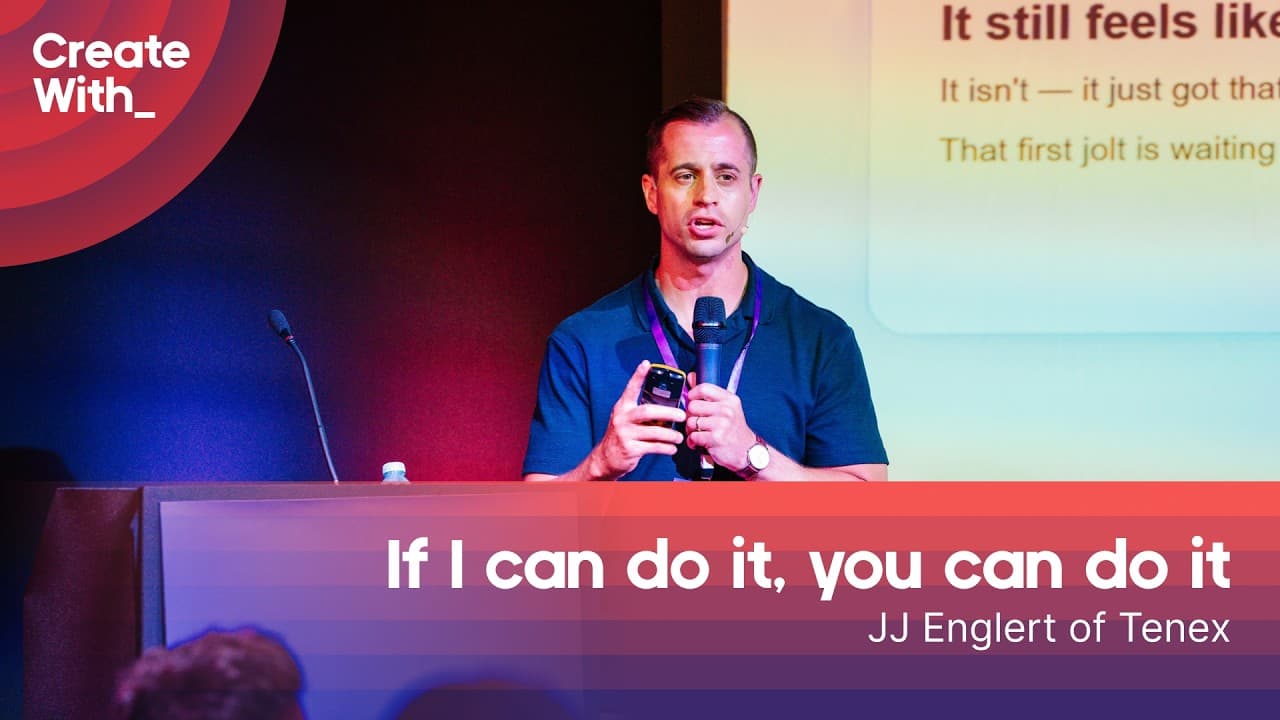
JJ Englert shares his journey from non-technical filmmaker to AI trainer and repeat founder, demonstrating how no-code tools and AI have democratized software development. Starting with a $50,000 failed build in 2017, he discovered Bubble in 2020 and later embraced AI coding tools to build products, grow communities, and help Fortune 500 companies adopt AI—all without a computer science degree.

Watch now ↗

Latest tool news

What else changed this week.

All tool news
VercelDigest

What Vercel Shipped in Late October

Vercel shipped quicker static deployments, four AI Gateway models, more free domain choices and new CLI controls in late October. The changes cover developers testing sites…

Vercel

Vercel Adds Submit_feedback to Its MCP

submitfeedback is a new Vercel MCP tool that lets agents and harnesses send bug reports, friction reports and feature requests directly to the Vercel team. Feedback can include…

The Create With Briefing

Don't watch forty changelogs. Read one email.

Every Tuesday: the tool changes worth knowing, real business use cases, and what's on near you. Free, unsubscribe any time.