Bubble
 Lovable
 Claude
 Cursor
 Supabase
Last week James and I attended the No-Code Poland conference in Gdansk. We both gave talks - Kieran's about "the boring niche opportunity" and James' about how we use AI Agents to automate loads of stuff at Create With.
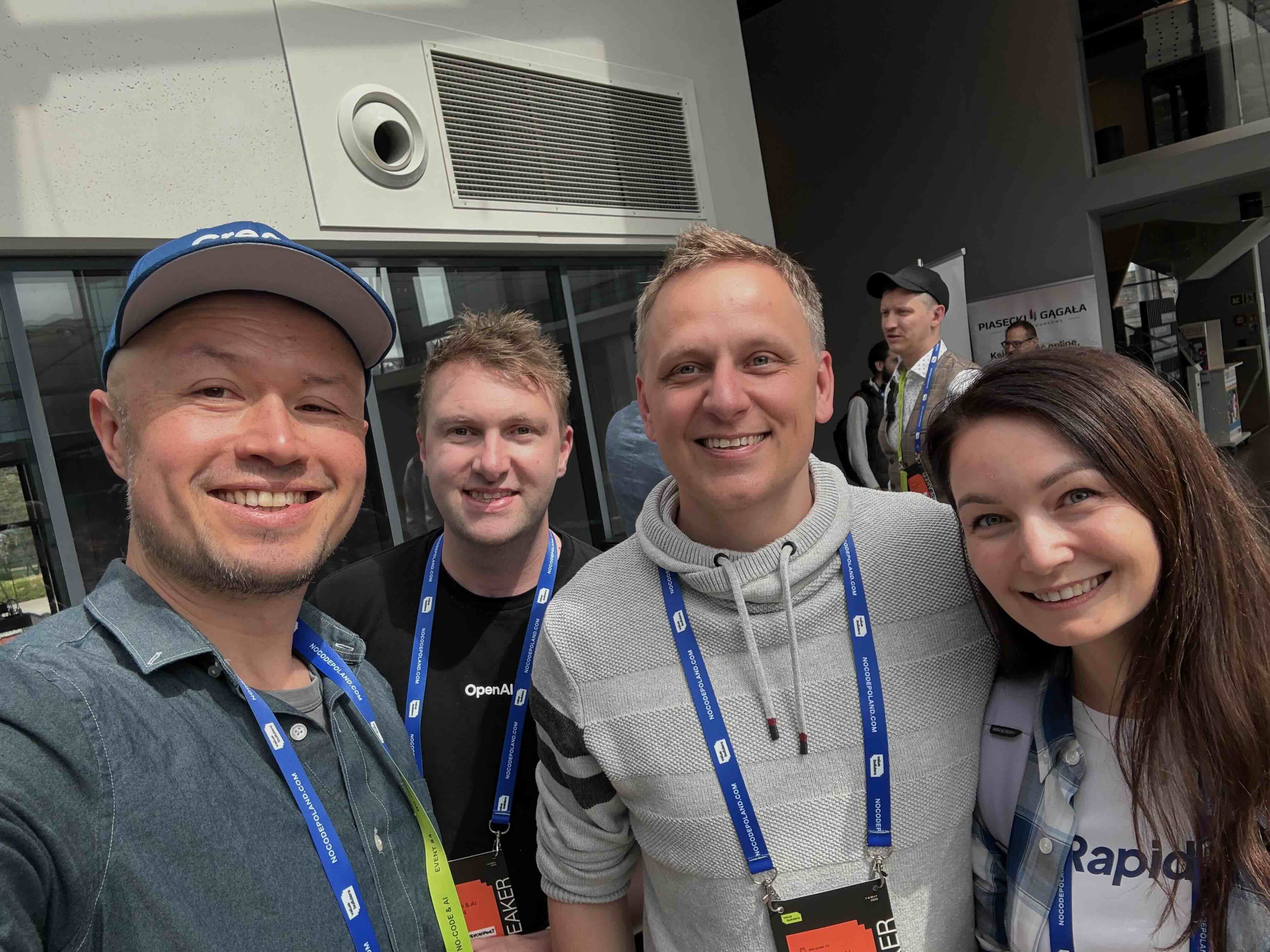
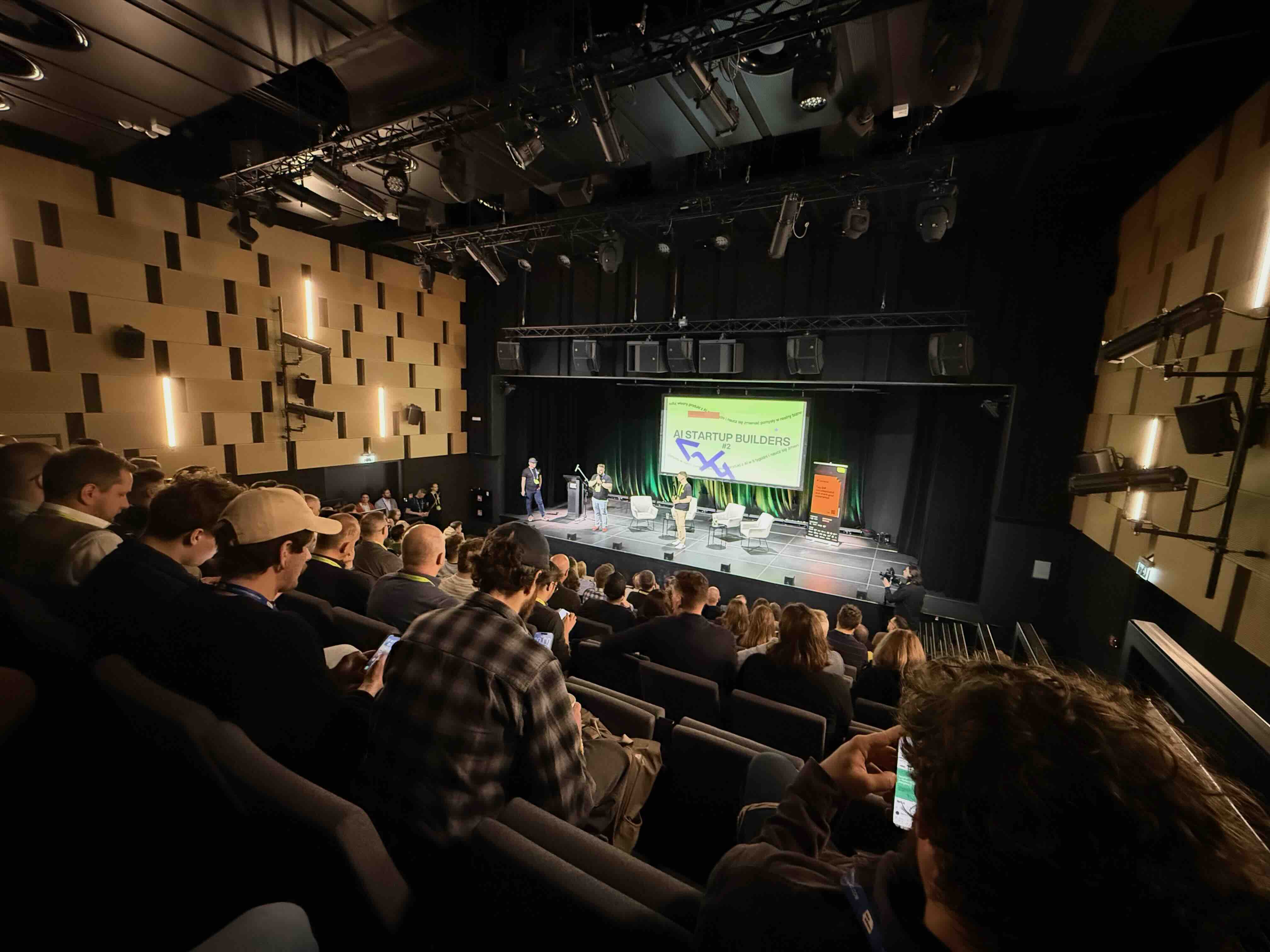
We thoroughly enjoyed meeting old and new friends at the conference, with some lively discussions about the current state of app development and what AI engineering means for no-code developers. Nothing beats real-life interactions for making friends and sharing knowledge.
During our down time at the hotel we both vibe-coded a couple of fun apps too - a networking game for our upcoming conference and a native Mac OS live transcription app!
Speaking of amazing in-person events, Create With Conference is coming up soon so grab your tickets before they sell out!
01 / 03
On Your Radar
Bubble's AI Agent now tackles your issues list
Bubble's AI assistant now automatically hunts down and fixes issues in your app development workflow. You can point the AI towards specific problem areas and watch it troubleshoot on autopilot. The issue checker has long been a killer feature for Bubble so this promises to make it even more useful.
Lovable wrote a security standard for vibe coding
There's a lot of talk about the risks of agentic coding, but until now, no one's been able to agree on what to do. Lovable have just stepped up with their own proposal for a standard with 51 requirements. Their goal is to be the first platform to pursue this certification (probably because they wrote it).
Claude limits have been doubled
Last week, Anthropic did a surprise deal with SpaceX to use their spare compute centres, meaning they've been able to remove the recent limitations on Claude Code and other Anthropic products.
Claude Code just added a /goal feature
Like Codex last week, Claude Code just added its own /goal feature which presumably will replace the need for its Ralph loop solution and let it iterate for hours until it achieves its mission.
02 / 03
Deep Dive: Is Cloudflare the all-in-one hosting solution you've been looking for
When you're building amidst the confines of a no-code or vibe-coding platform, you usually don't have to think about what infrastructure to host your app on as it's all taken care of.
As soon as you make the leap to a coding agent such as Codex, Claude Code or Cursor, this is suddenly a question you have to contend with.
Three platforms have emerged as the frontrunners for hosting AI-generated code. Each takes a radically different approach to solving the same problem: getting your AI-built app live on the internet without breaking the bank or your sanity.
Recently James has been using Cloudflare a lot, so we thought it worth doing a beginner level breakdown of why it's a solid option.
Cloudflare's "global edge"
Cloudflare built their platform around a simple bet: the future of computing happens everywhere at once. Instead of traditional servers sitting in a few data centres, they run your code simultaneously across 300+ cities worldwide.
The logic is sound. Your app loads from whichever location is closest to each user. Someone in Tokyo gets served from Tokyo, someone in London from London.
They also promise "almost zero cold starts" which means your AI-generated functions fire instantly rather than needing to wait for a server to start up.
But Cloudflare went further. They built an entire AI-first infrastructure stack:
- Workers - These run your code instantly, from servers all around the world. When someone uses your app, the nearest server handles it, so it feels fast no matter where they are.
- D1 - A database for storing organised information, like user accounts, orders, or product lists. Think of it like a spreadsheet that your app can read and write to automatically.
- KV Storage - A simple, super-fast way to store small bits of information your app needs to grab quickly, like settings or saved answers. It works like a dictionary: look up a word, get the definition.
- R2 - Storage for files like images, videos, or documents. The big selling point is that most cloud providers charge you every time someone downloads a file. R2 doesn't, which saves a lot of money as your app grows.
- Durable Objects - These handle things that need to happen in real time and stay in sync, like live chat, collaborative editing, or anything where multiple people are interacting at once.
- Sandboxes - A safe testing area where your AI can try things out without any risk of breaking your live app. Like a scratch pad you can mess up without consequences.
- AI Agent Tools - A full toolkit for AI agents, including an Agents SDK for creating goal-driven AIs, built-in memory so agents can learn from past conversations, and tools that let agents browse the web or search through documents.
They also have Agent Lee, an AI assistant that lives in your dashboard which helps with navigating the otherwise quite complex Cloudflare interface. Tell it "deploy a database for user authentication" in plain English, and it handles the technical setup.
The Alternatives: Vercel and Railway
To understand why Cloudflare is special, you need to know how it compares to the other two major platforms: Vercel and Railway.
Vercel (The Frontend Luxury High-Rise)
Vercel is built specifically to make the front of your website (what the user sees) look and run beautifully, especially if you use popular frameworks like React or Next.js.
-
The Good: It has the best developer experience on the market. Every time you make a change, Vercel automatically generates a "preview" link so you can see your app before it goes live to the public
-
The Bad: It can get very expensive as you scale. Vercel charges around $20 per team member per month, and their fees for bandwidth and serverless functions can lead to surprise bills if your app gets popular. It also does not have a native database, meaning you have to buy and connect a database from a different company.
Railway (The Full-Stack Container Home)
Railway is designed for apps that need heavy, always-running background tasks and complex databases.
-
The Good: Databases are built right in, not bolted on. You can create a database with one click, and it runs on the same infrastructure as your app, so everything's fast and connected. Pricing is straightforward too, you pay for what you use, nothing more.
-
The Bad: It lacks a global edge network. Your app runs in a specific region, meaning users on the other side of the world might experience slight delays. It also requires you to manually set up your own preview links, making the testing experience a bit rougher
Cloudflare pros & Cons
Pros
- Unmatched Cost at Scale: Cloudflare is drastically cheaper than Vercel. Their free tier offers unlimited bandwidth, and even massive sites with heavy traffic can run for just $5 to $60 a month, compared to hundreds of dollars on other platforms.
- Blazing Speed: Because your code runs on Cloudflare's massive global network of over 300 data centers, your app will load almost instantly for users regardless of where they live.
- Built for AI Automation: With tools like Sandboxes, Artifacts, and Agent Lee, Cloudflare is aggressively building infrastructure designed specifically to host AI-generated code safely and automatically.
Cons
- Steeper Complexity: Cloudflare has traditionally been more complicated to set up than Vercel or Railway, relying heavily on command-line tools. While Agent Lee is making this easier, the initial learning curve can be tough for a complete beginner.
- Strict Resource Limits: Because Cloudflare Workers prioritize speed, they have strict memory limits (128MB per request) and CPU time limits. If your AI generates code to process a massive dataset or heavy video file, the Worker might crash. Railway's always-on servers are much better for heavy lifting.
- Vendor Lock-In: Cloudflare uses a unique, specialized environment to run its code (rather than standard Node.js). Because of this, some standard code packages might not work perfectly, and if you ever decide to leave Cloudflare for AWS or Railway, it can be a painful process to rewrite your app.
Summary
If you want the absolute easiest, zero-configuration way to launch a beautiful user interface, Vercel is unmatched. If your app needs heavy, complex databases and background tasks with predictable pricing, Railway is your best bet.
However, if you want the most powerful, cost-effective infrastructure that scales effortlessly, Cloudflare is the ultimate powerhouse. It gives you all the tools an AI agent needs to build, store, and serve your app globally without bankrupting you when your app goes viral.

Cloudflare has become my (James') go to stack for hosting full stack applications. I originally used Workers just for simple singular services, but recently I've started hosting full stack entire applications on there and the experience has been wonderful.
Its platform gives you pretty much everything you need to build most apps. Workers to run the code, R2 for storage, D1 for a database, KV to store simple key value pairs and much more.
They also just added a full-blown email sending platform - so you don't even need to use a third party service like Postmark if you don't want to, Cloudflare just gives you everything out of the box.
Cloudflare's MCP and CLI tools also make it super friendly for AI builders like us. I've found it amazingly effective to build in Claude Code and Codex - because everything can be controlled via MCP or the CLI it can set pretty much anything up for you.
The other major consideration is cost - Cloudflare is incredibly generous with their free plan allowances. To move to the paid version of Workers is $5 a month! This is great if you need to run apps with large amounts of traffic or that need to process lots of data.
03 / 03
Andrej Karpathy: From Vibe Coding to Agentic Engineering
This is a great talk from 2 weeks ago by Andrej Karpathy, the "father of vibe coding", about where we are and where we're going next. He says that since December 2024 AI models have been able to reliably produce working code without constant correction, which means non-technical people can genuinely build software by describing what they want.
His key warning is to stop thinking about AI as a faster way to do old things and start asking what's newly possible e.g. his whole MenuGen app turned out to be unnecessary because a single prompt could do the same job.
The skill that matters now isn't coding, it's knowing what to build, writing clear specs, and checking the output makes sense.

Written by
Kieran Ball
Co-founder, Create With

Written by
James Devonport
Co-founder, Create With
The Create With Briefing
Get the next edition first.
Real-life use cases, the tool changes that matter, and the best events near you. Free, every Tuesday, to 8,600+ readers.