 Supabase
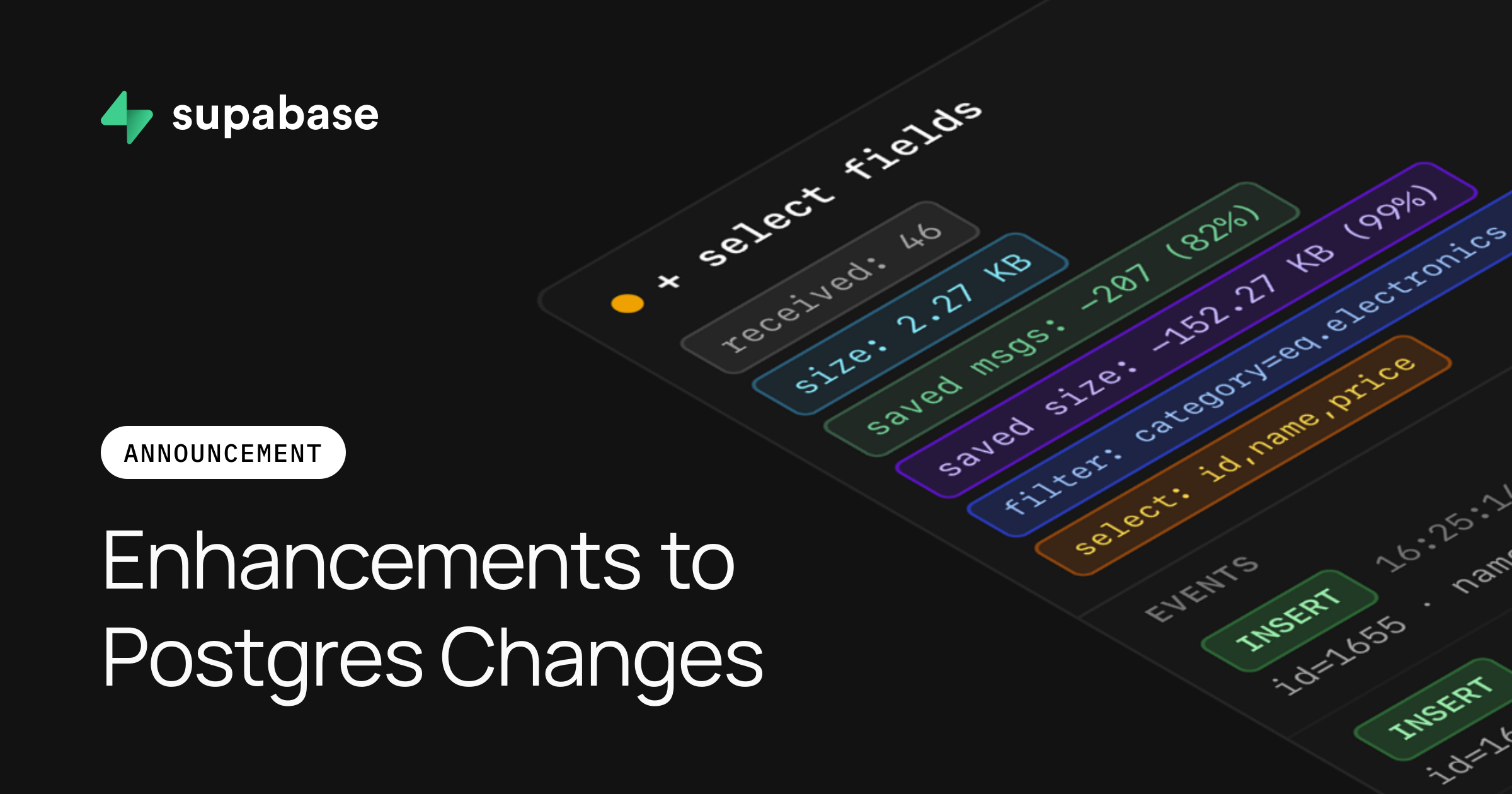
Supabase has upgraded Postgres Changes so applications can subscribe to a narrower slice of database activity instead of receiving broad events and filtering them locally. The update adds AND filters across multiple columns, several new operators, and column selection for smaller subscription payloads.
All three capabilities are available now, according to the company’s official blog post. Together, they address a practical limitation in Supabase’s real-time database layer: developers previously had relatively little control over which rows and fields crossed the WebSocket connection.
Postgres Changes lets an application subscribe to inserts, updates, and deletes on a Postgres table. Events are then delivered over a WebSocket as the underlying data changes, a pattern commonly used for dashboards, support queues, collaborative interfaces, notifications, and operational tools.
Multiple Conditions Can Now Run Server-Side
Previously, a Postgres Changes filter could evaluate only one column. A support dashboard, for example, could subscribe to tickets with an open status or tickets assigned to the billing team, but it could not require both conditions in one subscription. The client had to receive a broader stream and discard irrelevant records itself.
Filters can now be separated by commas, with every condition required to match:
supabase
  .channel('team-inbox')
  .on(
    'postgres_changes',
    {
      event: 'UPDATE',
      schema: 'public',
      table: 'tickets',
      filter: 'status=eq.open,team=eq.billing',
    },
    (payload) => console.log(payload)
  )
  .subscribe()
That shifts filtering closer to the database event stream. For small business applications built around live inventory, orders, leads, or customer requests, it should mean less client-side logic and fewer irrelevant events moving across the network.
Supabase has also expanded the operators available to subscriptions. The additions include:
likeandilikefor text patternsisfor null and boolean checksmatchandimatchfor POSIX regular expressionsisdistinctfor NULL-safe inequality- A
not.prefix for inverting an operator
Developers who do not want to assemble filter strings manually can use the postgresChangesFilter builder from @supabase/supabase-js. Chained builder methods use the same AND behavior as comma-separated conditions, bringing subscription filtering closer to query patterns already used elsewhere in Supabase’s client libraries.
filter: postgresChangesFilter()
  .eq('status', 'open')
  .gte('priority', 3)
Column Selection Cuts Unnecessary Payload Data
The other significant change affects the contents of each matching event. Postgres Changes previously returned the complete row, even when an interface needed only a few fields. A ticket list might display a subject and status while still receiving the full message body and associated metadata.
Subscriptions can now include a select option specifying which columns should be returned. Row filters and column selection solve different parts of the same problem: filters decide which records arrive, while select controls the fields included in those records.
This distinction matters for real-time products running on mobile connections or handling tables with large text fields and extensive metadata. Smaller payloads can reduce data transfer and the amount of processing required after an event reaches the browser or application. It may also simplify front-end handlers because they receive a payload shaped more closely to the view’s actual requirements.
The update does not change the core subscription model. Applications still listen for Postgres inserts, updates, or deletes over WebSockets. What changes is the level of precision available before those events reach the client, making Postgres Changes more practical for targeted production workflows rather than broad table-level monitoring.
Frequently asked questions
What is Supabase Postgres Changes?
Supabase Postgres Changes is a real-time feature that lets applications subscribe to inserts, updates, and deletes on a Postgres table. Matching database events are sent to the application over a WebSocket as they happen.
What changed in this Postgres Changes update?
Subscriptions can now combine multiple filters with AND logic, use additional operators such as like, is, and match, and select only specified columns for the event payload. Previously, filters were limited to one column and events carried the full row.
When are the new filtering and column-selection features available?
Supabase says all three improvements are available now. The announcement does not identify a separate paid plan requirement or additional pricing for using them.
Sources
1 checkedHow we cover tool news: Create With's tool desk drafts these reports with AI from the sources listed above and checks them against those sources before publishing.




 Xano
 ElevenLabs
 OpenClaw