 Claude
 Google Forms
 Stripe
 Supabase
We've noticed a lack of case studies on how real businesses are actually using AI-powered building on a day-to-day basis. So we're going to start collecting those case studies, and today we're sharing our first one.
If you've got a story to share, get in touch and we'll set up an interview. The best case studies will feature in this newsletter and on our shiny new website.

The new createwith.com, designed and built by James.
01 / 11
Case study: a €300,000/yr business that runs on 4 human hours a week
The facts. One-man company · Netherlands · founded 2020 · running on AI since early 2026 · run cost about €354 a month plus a Claude Max plan · in production · direct interview, 4 September 2026.
At a glance
- Maarten runs a one-man business in the Netherlands handling road traffic exemption admin for infrastructure repair firms.
- He ran it for five years on seven Google Forms and one spreadsheet. Typos in licence plates and addresses got through, and he checked every row by hand.
- He rebuilt it as a custom platform with Claude Code, without being a developer. He had working code within a week, spent a week or two cleaning the data, and went live at the start of the next quarter.
- Running the business now takes him about 4 hours a week, and it can run by itself for weeks if needed.
- Customers now serve themselves. Companies manage their own drivers and vehicles, and bad data is refused at entry.
- He took four weeks off on a boat this summer and the business ran without him. He got by on about 3 calls and an hour of email a week.
02 / 11
The business: preventing parking tickets for repair crews
In the Netherlands, gas, water and telecoms cables run under the ground. When one breaks, a repair crew has to park a van or a mini excavator somewhere that's normally forbidden. The government grants companies an exemption for this, and every vehicle and mechanic using it has to be registered and traceable.
Maarten handles that admin. The customer gets one thing from him, a physical card on the dashboard they can show a police officer.
03 / 11
Before: he was the validation layer
He started manual on purpose. His view was that if you automate a process you don't understand yet, you automate the wrong thing.
So for five years the business ran on seven Google Forms, one Google Sheet, Stripe and Gmail. He did everything himself, checking every row by hand, counting vehicles into Stripe at month end, emailing a CSV to the printing company, and laminating every card at his kitchen table as the final quality check.
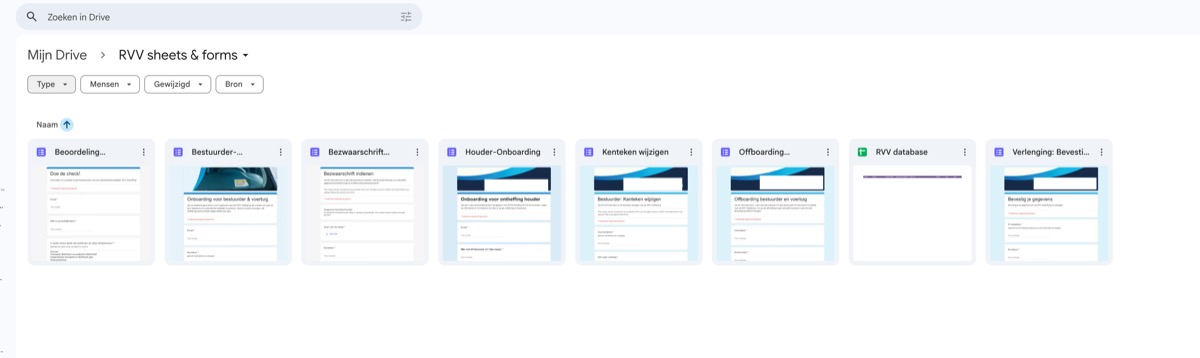
Mistakes turned into physical objects in the post. A typo in a licence plate meant a card that didn't match the vehicle, which is the one thing the card exists to do. A wrong address meant a card posted somewhere that didn't exist. He once overcharged a customer because his vehicle count was wrong.
"I spent a lot of time checking all my data line by line, correcting it by hand. But after a certain volume it becomes harder, and you're getting so used to checking everything's right that you're going too quickly yourself."
04 / 11
What changed: a tool arrived that made the rebuild possible
He'd tried to rebuild in a no-code tool and struggled for months, because learning a new platform at ten at night after a full day of work didn't work for him.
Then Claude Code came out at the start of 2026. He installed it on a Thursday, and by the end of that day it had built the things he'd been stuck on for months. Within a week, everything on his backlog board was working code.
05 / 11
What he built: the same six steps, with the checking moved to the front
- Data in. A custom app checks licence plates against the Dutch roads authority's open API, so the customer sees the make and model of the car they've just typed and confirms it. Addresses are checked against a national address database, which means a typo can't get in.
- Checking. This is gone as a separate job, because the system refuses data it can't verify.
- Invoicing. Invoices are generated from the live vehicle count, and payments are matched automatically through Mollie.
- Customer changes. Companies now manage their own drivers and vehicles in a dashboard, with permissions set per role. His largest client has 800 vehicles, so he built a CSV import for them.
- Printing. A new print supplier has an API, so data goes out, dispatch status comes back, and they handle the laminating too.
- Final check. This one is also gone, because the new print supplier laminates the cards too.
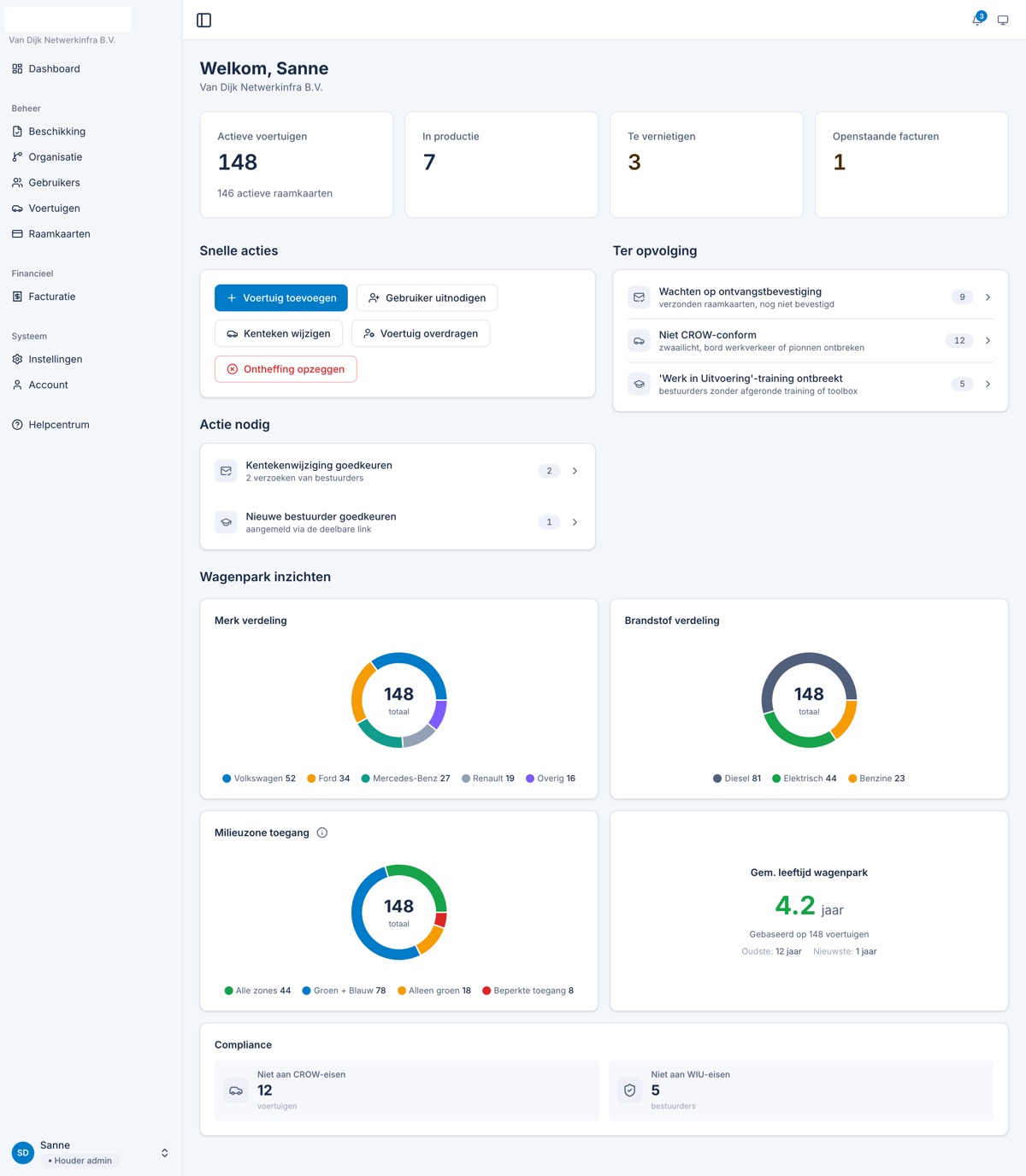
Claude Code makes it much faster to add new features. A client asked him to stop drivers editing their own vehicle details. The feature didn't exist, and he said he could turn it on for them anyway. He put the phone down, prompted Claude Code, and called back fifteen minutes later to say it was done.
The stack. He built it with Claude Code on Supabase and Vercel, with Mollie for payments, Resend for email, Sentry for error monitoring, and two free Dutch government APIs. The whole thing costs about €354 a month to run, plus his Claude Max plan.
06 / 11
The result: half the hours, and a month away to prove it
- Operations take about 4 hours a week, down from about 8. These are his own estimates, nobody was timing anything in either period. The hours are also much more forgiving now, the old eight had to happen every day as requests came in, while these four can wait if he needs time off.
- He took four weeks off this summer, doing about 3 calls a week and an hour of email. He didn't open Claude Code once.
- Live since 1 April 2026, including an 800-vehicle client.
The revenue picture. His revenue has grown significantly since the switch, to around €300,000 a year. The business was growing anyway, so the platform doesn't get all the credit. It does get some though, because a professional self-service product helped him win bigger, more established clients, and the time it freed up now goes on sales and marketing instead of admin.
07 / 11
Security: the part you have to take seriously
If you're non-technical and building something that holds customer data, security is the part to take seriously. The risk is real, because AI-written code is code you can't judge yourself, and Maarten is blunt about it.
"It's an easy tool, it easily fools you."
His answer is a weekly review, where he has Claude go back over the codebase and check that it's still solid, still secure and that it scales, re-running it whenever a new model comes out. He spent a decade of his employed career working to ISO 27001 security policies, and he's confident the app is secure because of these regular checks.
08 / 11
Your first step: check your most expensive field
Take the single field in your business where a typo costs you most, whether that's a postcode, an account number or an email address. Stop trusting what gets typed into it and check it against something. Then look at your last ten manual corrections and count how many were a value that could have been looked up. That count tells you whether this is your problem.
09 / 11
His advice: what he'd tell someone still on Google Sheets
- Get the process right before you automate it. He ran on Google Forms for five years on purpose. If you automate a process you don't understand, you make the wrong thing faster.
- Don't build the spaceship. If you keep adding features, it never flies. Start with the one process that's costing you most.
- Solve the customer's problem, not yours. His customers wanted a correct card on the dashboard. They didn't care that he laminated it in his kitchen.
And if he started the same business today, he'd go straight to Claude Code on day one.
Case studies are published to help readers understand how other organisations approached a problem. They are not endorsements of a tool or a vendor, and one company's result is not a forecast of yours.
10 / 11
Customer support: from writing every reply to reading every draft
Before. Support was Gmail plus his memory, with every reply written from scratch. His mechanic customers like to ring rather than email, and whatever was said on a call existed only in his head afterwards. He describes himself as a goldfish.
What changed. He bought Intercom first, and it couldn't do the thing he needed most, connecting what was said on a call to the customer's record, orders and payments. So he built support into his own app instead, following one rule, every data point the company generates lands in one application.
What he built
- Every inbound email gets a reply drafted from his knowledge base, waiting in his own help desk. He says he corrects two or three things at most on a normal enquiry.
- Every call is recorded, transcribed and summarised. He switched telephony provider specifically to get recordings with an API. Each call attaches itself to the right lead or client, generates follow-up tasks, and drafts the follow-up email.
- His own replies stop as drafts until he's read them. An AI assistant gives customers an instant first answer, and Maarten follows up himself.
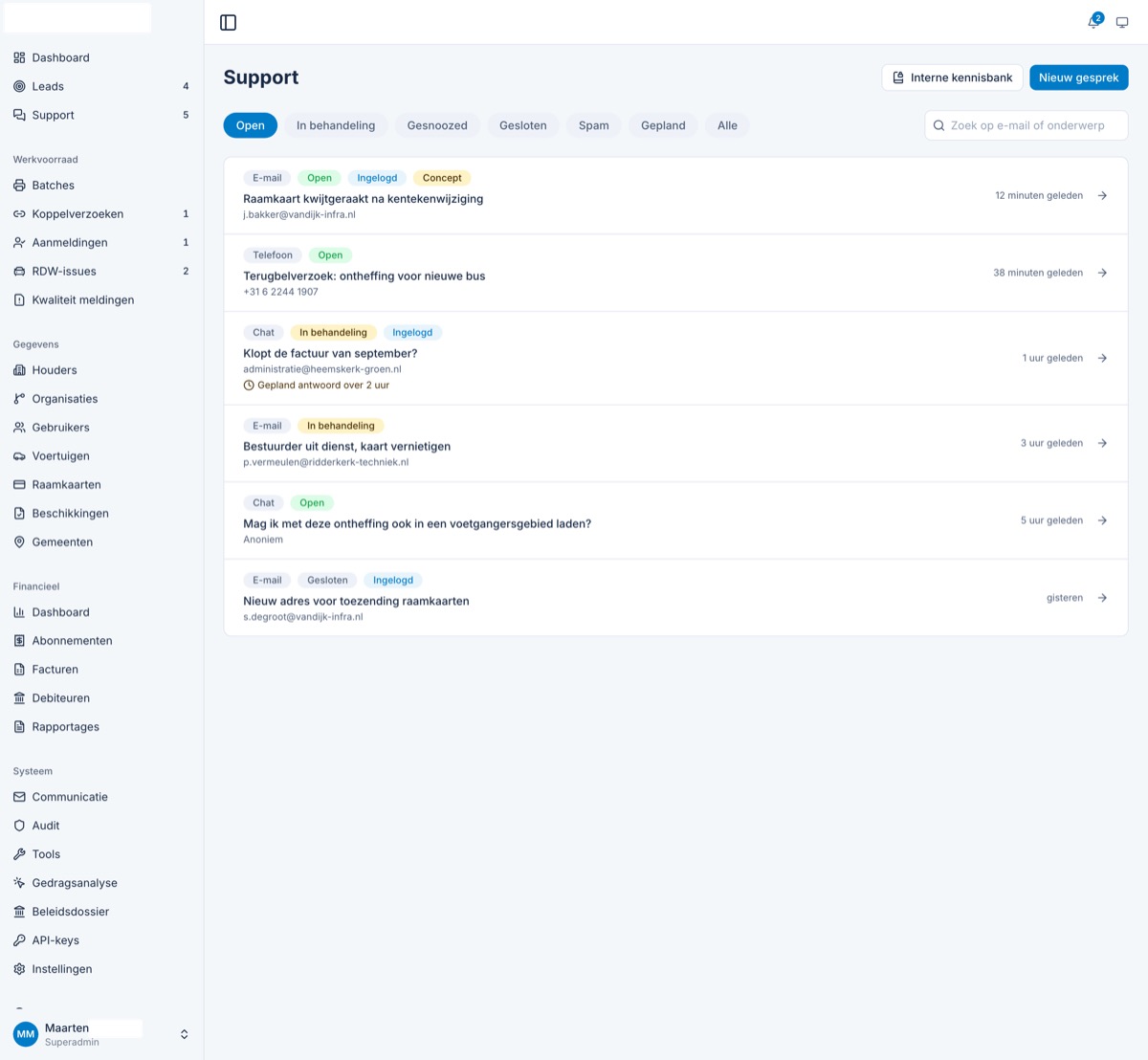
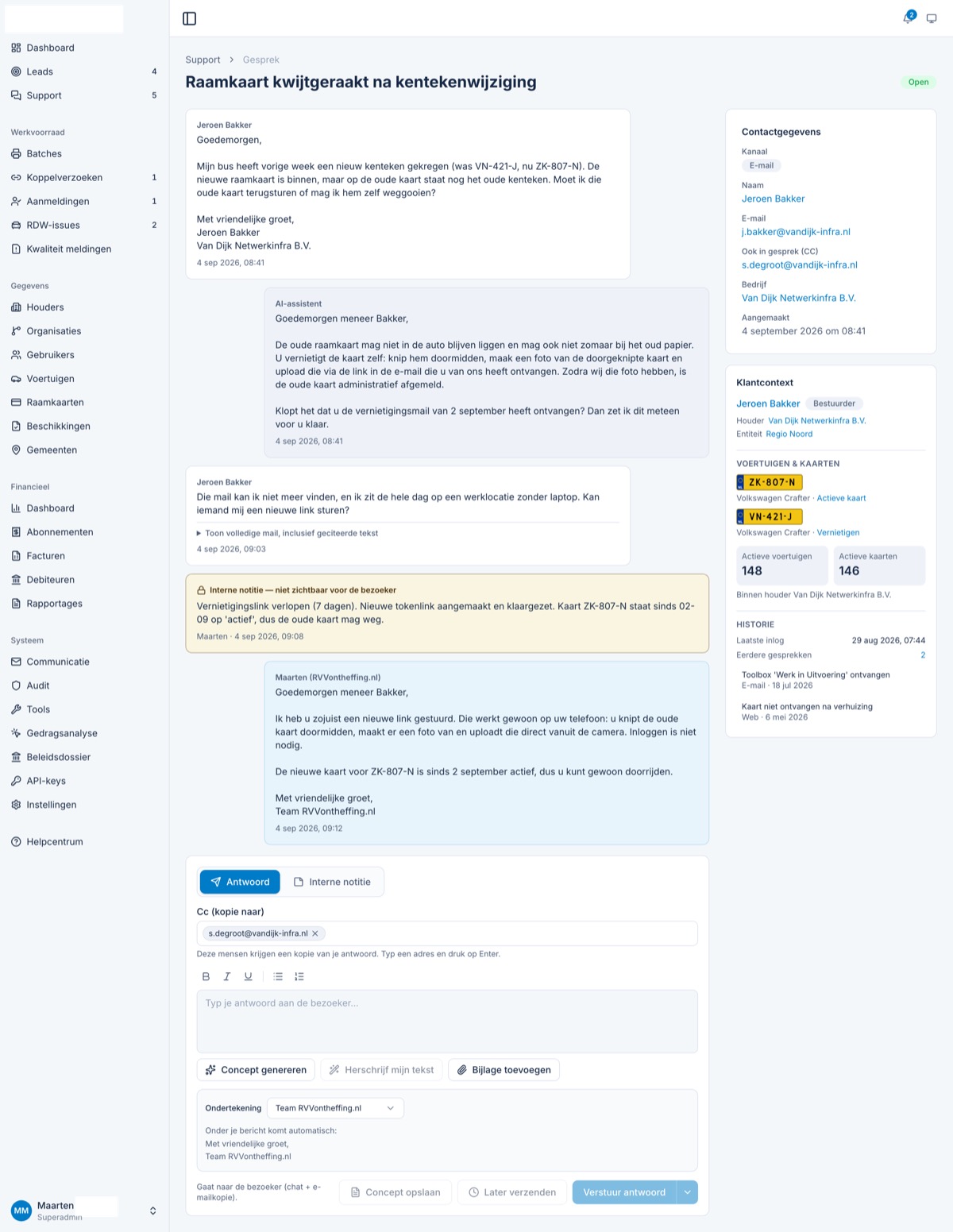
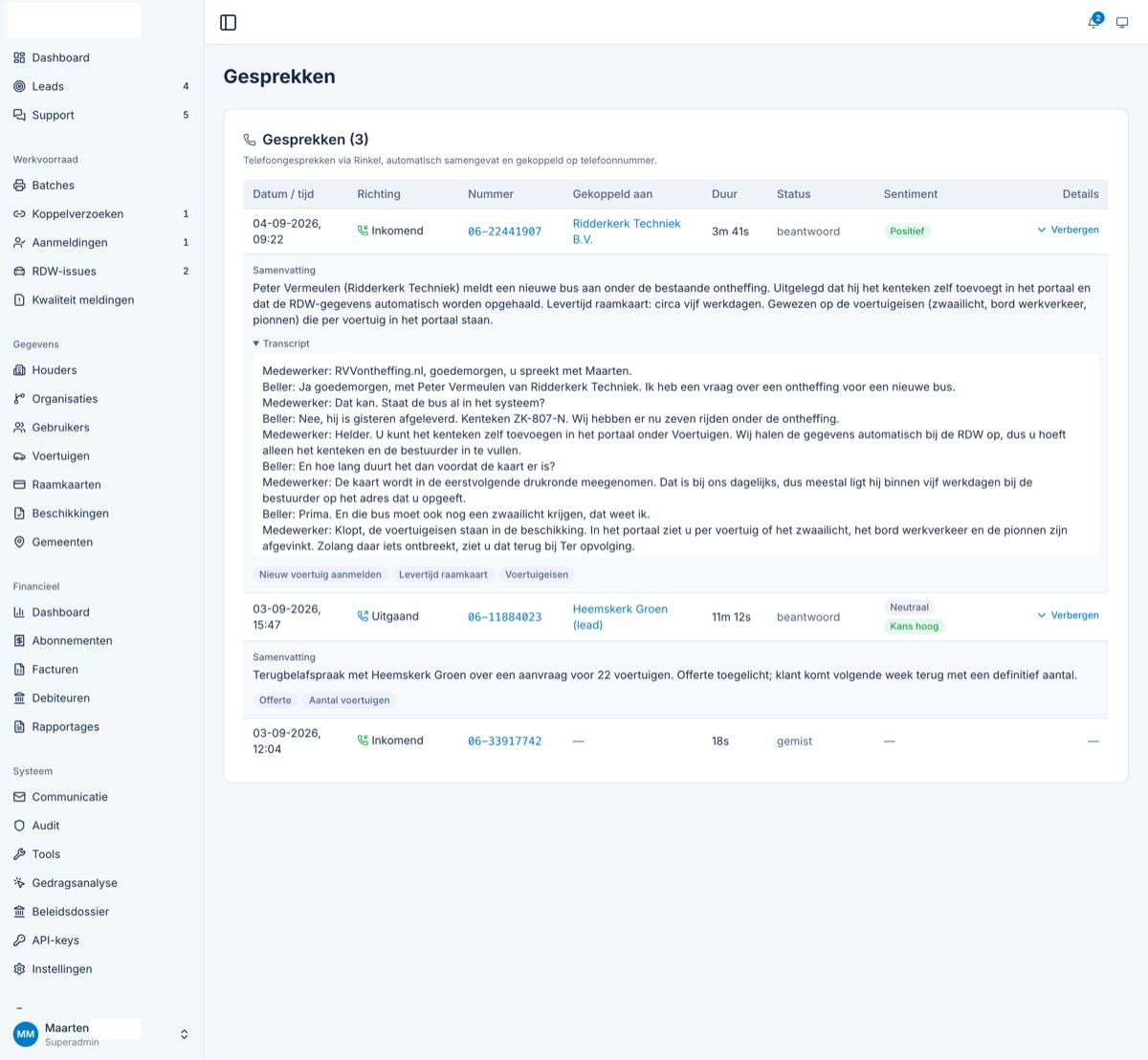
Result. Intercom cancelled. He was paying €65 a month on a startup programme, and the standard price after three years would have been over €900 a month. His own version costs almost nothing extra to run, because the Claude API calls behind it are cheap, and support now takes almost none of his four weekly operations hours, he estimates.
Still breaks. Reading every outgoing email caps how far this scales. He knows, and he hasn't automated the send. The drafts aren't reliable enough yet, and he wants to know what leaves his company. At two or three corrections per reply, reading costs a fraction of writing, so the cap is a long way off for a one-man business.
Your first step. Take your last twenty support emails and the answers you gave. Put them somewhere an AI can read them, and have it draft replies to new enquiries into a folder rather than sending them. Count how many you'd have sent unchanged. That number tells you whether to build the rest.
11 / 11
The data migration that turned into an audit
Before. Everything lived in one Google Sheet, maintained by hand since 2020, with no rules on any field. He knew there were errors in it, but not which ones or how many.
What changed. The new system wouldn't take the old data, because validation applied backwards to five years of unvalidated data is an audit, whether you wanted one or not.
What he built. He wrote an import into Supabase with real constraints, and it kept halting on records that contradicted each other and asking him what to do. Slow and deliberate work, and the cleaning itself took a week or two.
Result
- Errors he'd never spotted were surfaced and fixed rather than carried into the new system.
- He found customers he had never been charging. He was giving away work for free without knowing it.
- The cleaning took about as long as the build, a week or two of judgement calls against a week of code. Going live then waited until 1 April, deliberately, so the new system started on a clean quarter for his bookkeeping.
Your first step. Write down the rules your data is supposed to follow, things like phone numbers having the right number of digits and every customer having an address. Then check your existing spreadsheet against those rules and count the failures. That count is your migration estimate, and you can get it in an afternoon.

Written by
Kieran Ball
Co-founder, Create With

Written by
James Devonport
Co-founder, Create With
The Create With Briefing
Get the next edition first.
Real-life use cases, the tool changes that matter, and the best events near you. Free, every Tuesday, to 8,600+ readers.