PostHog
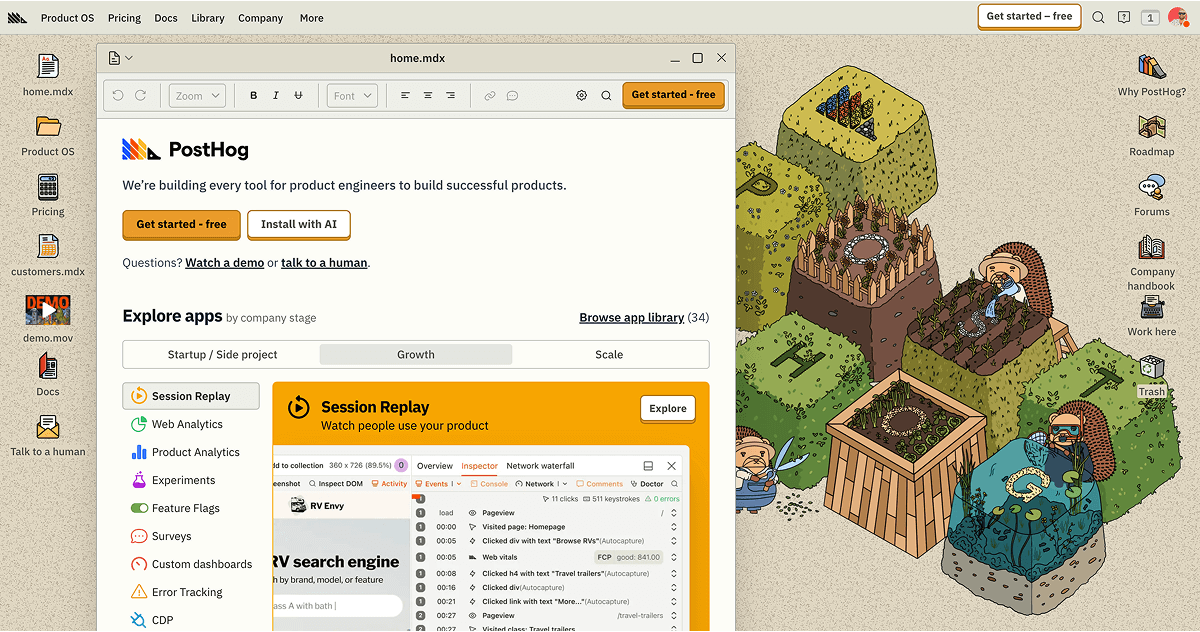
PostHog detailed eight internal workflows powered by its Slack app in a LinkedIn post this week, demonstrating how the analytics platform uses AI agents to automate tasks ranging from quick code fixes to retention analysis without leaving Slack.
The app handles requests like "increase the limit for hogflows returned from the hogflows api to 200 for now." It locates the relevant code, makes the change to match existing patterns, and runs tests to verify the update works.
Performance Profiling and Incident Response
When a team member asks why 403 errors to /insights spiked, the Slack app queries the specific insight, examines events via SQL, identifies the spike, and traces it back to an access control change. It then suggests next steps for resolution.
The app also profiles performance issues. A request to analyze create_hogql_database's children and identify time-consuming operations triggers the app to pull trace data, build a call tree, aggregate slow calls, and deliver an analysis inline.
This builds on PostHog's recent Slack integration that enabled non-engineers to deploy code changes.
Test Generation and Non-Engineer Workflows
The app writes integration tests for unmerged pull requests. When asked to add endpoint tests similar to existing /i/v0/e tests, it identifies the pattern, determines test placement, and commits the tests to a branch based on the PR, relying on CI for validation.

Non-engineers use the app to ship changes directly. A request to update all signup links from /sign-up to /signup across landing pages results in the app finding every instance, making the changes, and opening a draft pull request.
Product Analytics and Retention Queries
Basic product usage questions get answered without opening PostHog. Asking how many users engage with the sentiment tab in AI observability LLM analytics prompts the app to determine the correct page path, run a distinct user query, and provide analysis.
Retention questions require more complexity. A request to determine inbox retention for users who engage multiple times involves the app finding the correct event, tailoring the retention definition based on engagement, running the query, and sharing the analysis. Traffic source investigations work similarly; the app queries pageview data and breaks down referrers when asked where traffic for a specific blog post originates.
The workflows represent a shift in how teams interact with analytics and code. By consolidating queries, code changes, and analysis in Slack, PostHog eliminates context-switching between tools. The app handles both technical tasks like test generation and non-technical requests like link updates, making deployment accessible beyond engineering teams.
Sources
1 checkedHow we cover tool news: Create With's tool desk drafts these reports with AI from the sources listed above and checks them against those sources before publishing.


 Supabase