Skip to content
All tool news

Tool desk · Updated daily

Tool news·Lovable·

Lovable Lets Developers Reference Existing Projects to Reuse Code and Workflows.

Lovable now allows users to reference other projects in their workspace to reuse authentication flows, components, and design systems.

CW

Create With tool desk

1 source checked · 2 min read · 4 sections

ShareLinkedIn
Lovable Lets Developers Reference Existing Projects to Reuse Code and Workflows

Lovable has introduced a feature that lets developers reference existing projects in their workspace while building new ones, enabling teams to reuse code patterns without rebuilding solutions from scratch.

By typing "@" and selecting another project, Lovable will explore its file structure and read source code to identify reusable patterns. The feature can pull authentication flows, assets, components, or entire design systems from one project and adapt them to a new context. The referenced project remains unchanged.

How Cross-Project References Work

The feature is designed for teams managing multiple builds who need to move fast without duplicating work. If a developer sets up authentication once and gets it right, they can now tell Lovable to use the same setup in a new project. Lovable reads how the original implementation was built and adapts it to the new environment.

The workflow applies to more than just authentication. Developers can reuse UI components, data models, API integrations, or styling frameworks. If a workspace contains a project with a polished design system, that system can be referenced and applied to a new build without manual copying or translation.

Why It Matters for Fast-Moving Teams

The feature addresses a common friction point for developers building multiple products or prototypes. Rebuilding authentication, component libraries, or other foundational patterns across projects wastes time and introduces inconsistency.

Lovable's approach treats existing projects as reusable knowledge. Instead of asking developers to manually extract and port code, the tool reads the structure itself and handles the adaptation. This reduces context-switching and keeps developers focused on new features rather than setup tasks.

Lovable scaling agentic coding

The update comes as Lovable continues to expand its workspace-level capabilities. In June, the company launched Workspace Insights for enterprise governance, giving admins visibility into every project being built across their organization. Cross-project referencing extends that workspace-oriented design by treating the entire workspace as a shared knowledge base.

Practical Use Cases

Developers building a suite of internal tools can use the feature to standardize authentication across all apps. A team launching multiple customer-facing products can reference a shared design system to maintain brand consistency. Agencies managing client projects can reuse proven patterns without starting from zero each time.

The feature also benefits solo developers managing personal projects. If someone builds a side project with a payment flow they like, they can reference that project when starting a new one and have Lovable adapt the payment setup to the new context.

Availability

The cross-project referencing feature is available to all Lovable users. It works within any workspace and requires no additional setup beyond having multiple projects in the same workspace.

Lovable is a vibe coding platform that lets users build software products through a chat interface. The tool competes with Bolt, v0, and Cursor in the AI-assisted development space.

Sources

1 checked

How we cover tool news: Create With's tool desk drafts these reports with AI from the sources listed above and checks them against those sources before publishing.

Worth passing on?

ShareLinkedIn

Go deeper on Lovable

Related reading, watching and going.

Everything on Lovable →

The briefing

2 Jun 2026

AI Hackathon UK: Build Apps with No Code in 48 Hours

Join Create With's online & in-person AI hackathon June 2026. Learn vibe coding to build apps without technical skills. Supporting Brighton charities. Register now!

Read →

The briefing

19 May 2026

How to Migrate Your App from Lovable to Claude Code in 2025

Step-by-step guide to migrating your Lovable app to Claude Code. Learn how to move from Lovable's managed platform to a stack you own and control.

Read →

The briefing

12 May 2026

The Ultimate Cheap & Scalable Stack for AI Agent Development

Discover the latest AI agent tools and vibe-coded apps from No-Code Poland. Learn about Bubble's AI assistant, Lovable's security standards, and more.

Read →
36 min

Podcast

55. We're Back! Conference Recap, Running Events with AI & Self-Healing Apps

James and Kieran return to the Create With Podcast after their summer break to recap the 2026 Create With Conference in Brighton. They discuss how 550 attendees experienced workshops, a charity hackathon where functional apps were built in 30 minutes, and an innovative conference operating system built entirely with AI. The episode covers the latest developments in AI development tools including Anthropic's Fable model, scheduled tasks in Codex, and self-healing applications using PostHog.

Watch now ↗
29 min

Conference

AI Lets You Build Everything—Here’s Why You Still Never Launch

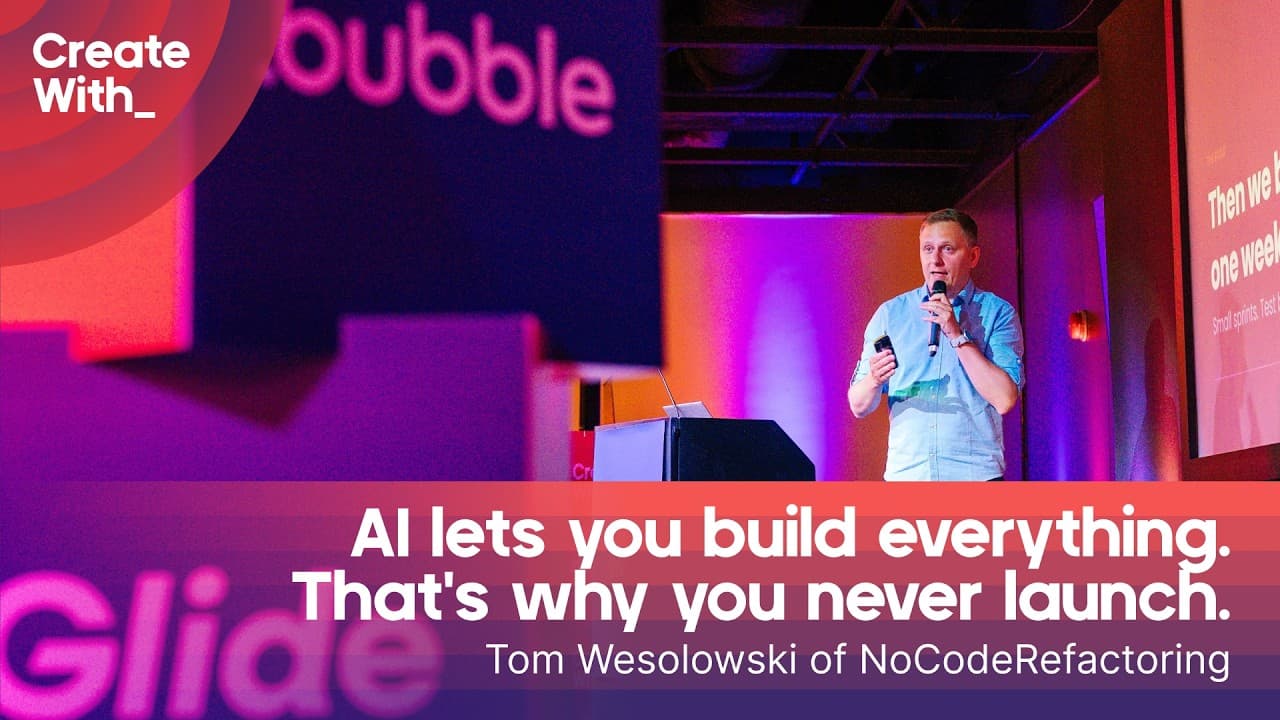
Tom Wesolowski, owner of NoCodeRefactoring.com, delivers a conference talk exposing how AI's ability to build anything has created a new problem: chronic overbuilding that prevents launches. Using a real marketplace project as a case study, he demonstrates how an 80% scope reduction transformed a stalled four-month development into a revenue-generating product launched in two weeks. The talk provides a practical framework for identifying the minimal viable customer loop and postponing everything else until real user demand validates the need.

Watch now ↗
34 min

Podcast

My Daughter Built a Website Business, Claude Design First Look & Going All-In on Cloudflare

James and Kieran discuss practical AI-powered development through real-world examples, including a seven-year-old building a website business with Claude Code voice mode, Anthropic's new Claude Design tool, API security challenges in the AI agent era, and Cloudflare's expanding AI infrastructure offerings. The episode covers hands-on experiences with vibe coding, emerging design tools, and the evolving landscape of AI-assisted development.

Watch now ↗

Latest tool news

What else changed this week.

All tool news
VercelDigest

What Vercel Shipped in Late October

Vercel shipped quicker static deployments, four AI Gateway models, more free domain choices and new CLI controls in late October. The changes cover developers testing sites…

Vercel

Vercel Adds Submit_feedback to Its MCP

submitfeedback is a new Vercel MCP tool that lets agents and harnesses send bug reports, friction reports and feature requests directly to the Vercel team. Feedback can include…

The Create With Briefing

Don't watch forty changelogs. Read one email.

Every Tuesday: the tool changes worth knowing, real business use cases, and what's on near you. Free, unsubscribe any time.




