 Claude
 Cursor
 Lovable
 OpenClaw
 Stripe
01 / 04
On Your Radar
Codex launched Goal Mode
A couple of months ago everyone was talking about the Ralph Wiggum plugin for Claude Code which meant you could give Claude a goal and it would keep working at it until it was finished. Codex just quietly launched their own version of this called /goal. As with the Ralph plugin, users are testing out leaving Codex running on complex problems for hours, if not days, with impressive results.
Subtle shifts
This week but we have noticed a subtle shift in the tools people are favouring. People seem to be moving from Claude Code to Codex, and from Openclaw to Hermes. Should you change to follow the trend? Probably not. But if you're just starting out it's interesting to know where the chips are falling.
02 / 04
Deep Dive: The Revenge of the "Idea Guy"
At Stripe Sessions, Sam Altman just validated something that would have got you laughed out of a YC office two years ago. When Patrick Collison asked what's changed about startup culture, Altman didn't hesitate:
"All of a sudden it's like the revenge of the idea guys."
This is the same person who used to mock founders saying "I have the best idea, I just need a coder to build it." For years, technical talent was the most important thing he looked for in founding teams.
Now he wants to fund people who deeply understand their users and can't write a line of code.
The Economics Shifted Dramatically
The numbers tell the story:
Two years ago: ~£50k and six months to get from idea to something a user pays for. Today: with Claude Code, Lovable, Cursor and friends, closer to £500 and a weekend.
We've watched builders in our community ship things over weekends that would have taken six months and a five-figure budget in 2022. The speed difference is genuinely transformative.
Code is no longer the bottleneck.
But - plot twist: code being the bottleneck was never the actual problem.
What Has Actually Changed (And What Hasn't)
I (Kieran) once went to a tech meetup where someone enthusiastically pitched a hugely ambitious idea for a new form of public transport: a series of hi-tech buses which could dock and undock from each other as they drove down the motorway to take people to their various destinations efficiently.
The pitcher was 100% convinced his idea was the future... he just needed funders, a technical team, and customers to believe in him.
I never heard anything else about it.
These visionary "idea people" had a few boxes to tick to get anywhere:
- Have they identified a real problem
- Do they understand the problem and the market inside and out
- Could they find reasons someone would pay
- Could they convince people to give up the vast money or time it would cost to build it
AI didn't fix everything. It just made the last one less important.
Now, if you can do the first 3, you're looking good.
If you know a problem inside out because you've lived it, you've got a working prototype within reach. Domain expertise is the new moat.
Paul Graham's old line was that the way to win at startups is expertise in your users, not in startups. That advice was true in 2010 and it's about ten times more useful now. You're the only person who can be that expert. The coding part is commoditised. The user-understanding part is not.
A Four-Step Playbook
The work is research and listening, not pitch decks:
• Pick a problem from your actual work life - A workflow at your day job. A frustration costing your team hours. The bar is "I see this every week and it still annoys me."
• Get painfully specific about one user - Not "small business owners". One person. Job title, age, software they use, monthly spend, why they hate it.
• Talk to ten of them before writing a single prompt - Listen for what they're already paying for, what they hack together in spreadsheets, what they've complained about three times.
• Build the worst possible version this weekend - One slice of the problem, one user. Charge for it before you build feature two. Money is the only validation that matters.
The Reality of Vibe Coding Your Idea
AI builders take you to rapidly 60-80% of the way to a working product. The last 20-40% is where real engineering judgement lives, and it's where vibe-coded apps take time and effort.
Server-side validation, session auth, error monitoring, sensible database setup. Whether you realise it or not, you will come across these complexities at some point. Vibe coding just delays the inevitable a bit longer.
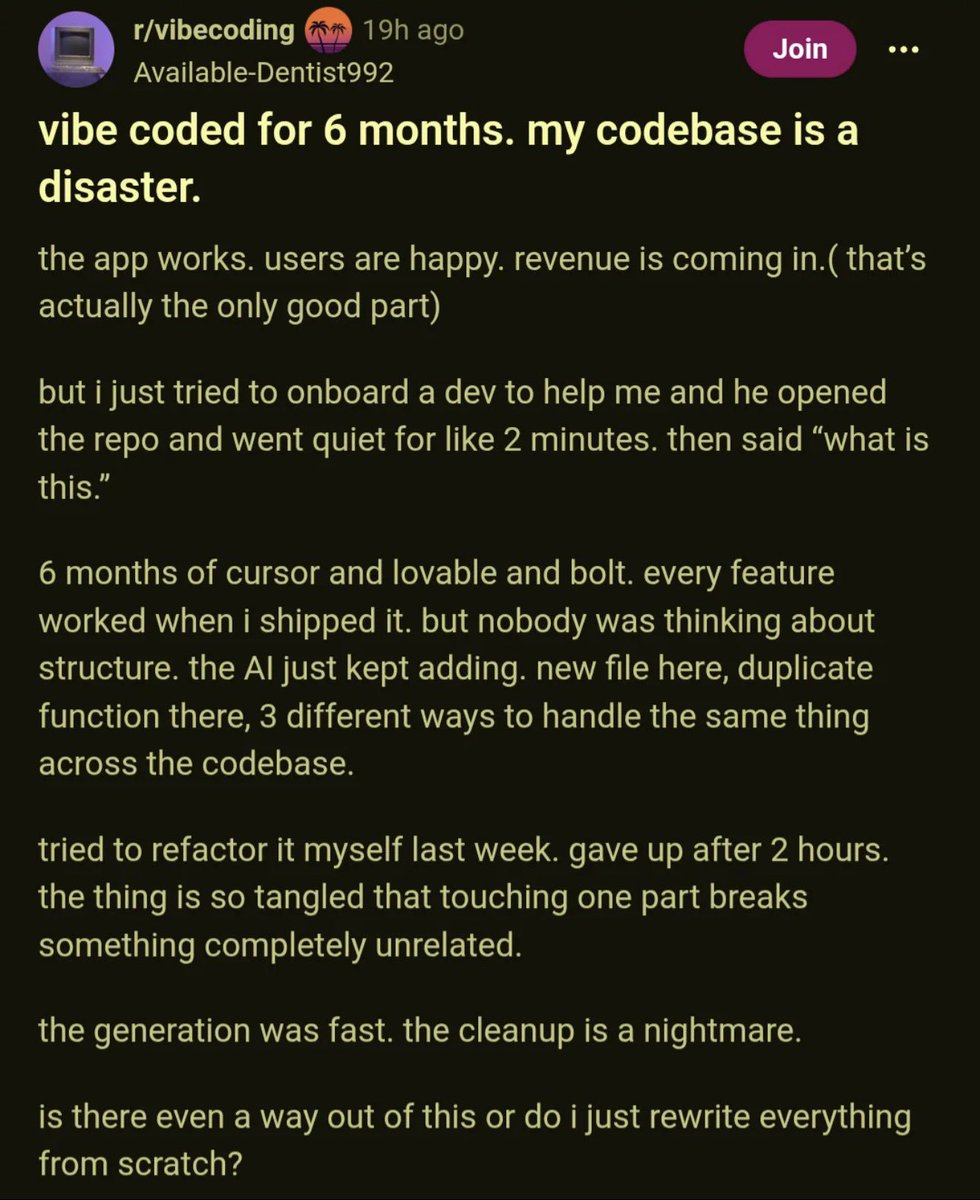
If you're realistic ("this is going to take longer and be more fiddly than I expect") and curious ("I don't understand this but that's okay, I can learn it") you can build solid products with AI. It's just never going to be as easy as you hope.
The Cleanest Path Forward
The process we're seeing working in practice:
- Use AI to carefully plan your project before building - try to understand the key decisions
- Build your MVP with the future in mind - let AI know it's the first step of a larger project
- Pay extra attention to app security before you get any users - this cannot be understated
- Then get paying users to validate your idea - avoid the age-old trap of offering it for free
- Pay a developer for a few hours now and then to audit your app - worth every penny
- Learn as much as you can along the way - use AI as your personal tech teacher
- Join communities of other non-technical builders - you can't beat peer-to-peer learning
Ultimately, if you can get 100 paying users on your vibe-coded MVP you'll be much better positioned to raise a small amount of funding and get a solid production app built by a developer (leveraging AI of course).
The Honest Test
Could you, today, write a 500-word document describing a problem your users have, without using "platform", "AI-powered" or "marketplace"? With names, numbers, workflows, and what they're paying to limp through it?
If yes, you're the kind of idea person Altman's talking about.
If not, that's the work that's actually been unblocked.
The bottleneck used to be finding a coder. Now it's finding a real problem you care enough to solve.
Sam Altman is putting money on the people who can do that bit. So is the rest of the market, eventually.
03 / 04
Video: Designing the Ideal Bootstrapped Business with Jason Cohen
Seeing as we're talking about ideas, we thought we'd share this absolute classic talk from Jason Cohen from Microconf in 2013. Don't be fooled by its age, his advice is timeless. This video is a masterclass on how to build a profitable SaaS business.
Watch it now, and then again at least once a year.
04 / 04
Final Thoughts
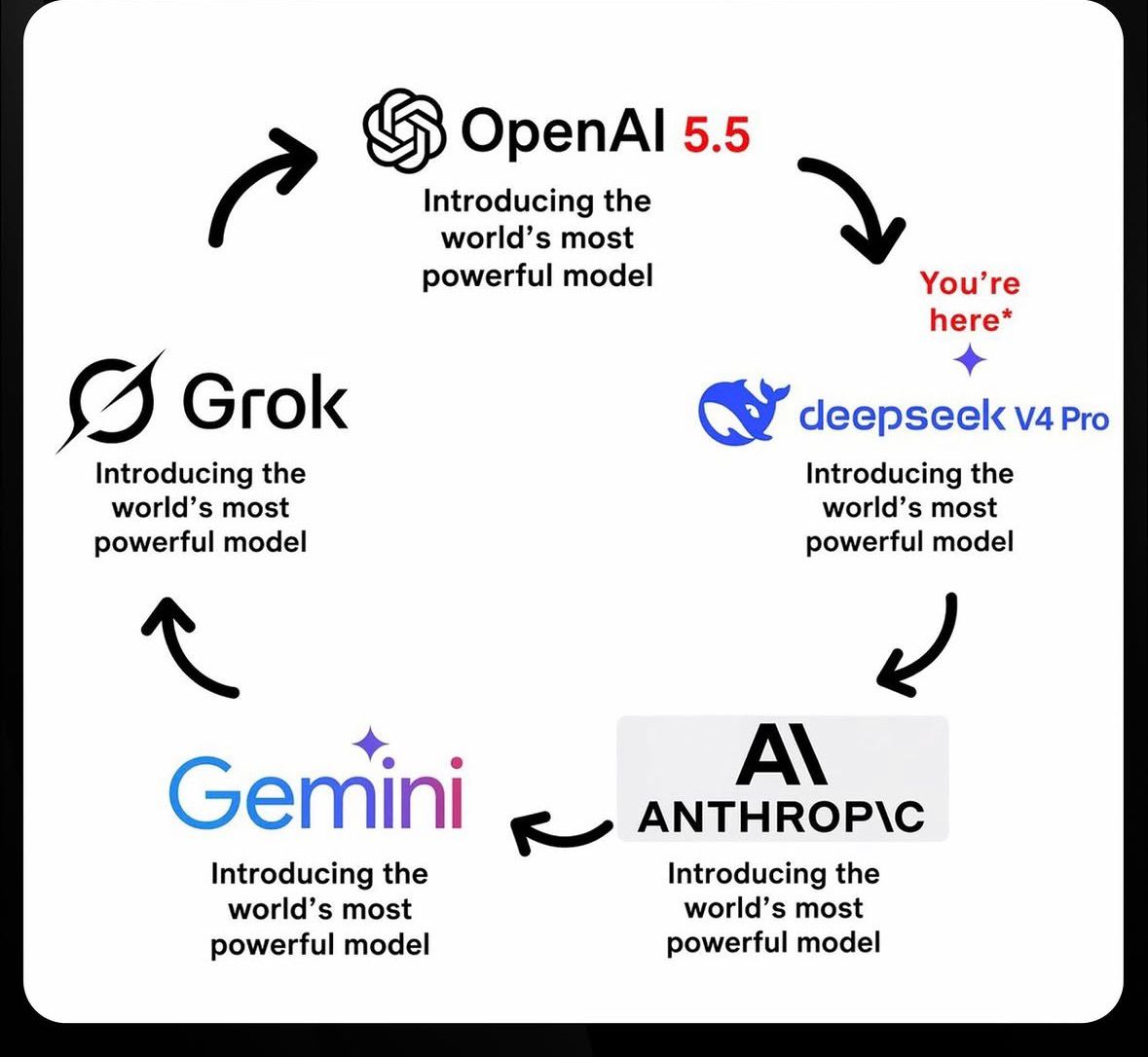
We are all stuck in this infinite loop with no way to exit.

Written by
Kieran Ball
Co-founder, Create With

Written by
James Devonport
Co-founder, Create With
The Create With Briefing
Get the next edition first.
Real-life use cases, the tool changes that matter, and the best events near you. Free, every Tuesday, to 8,600+ readers.