Skip to content
All tool news

Tool desk · Updated daily

Tool news·Zapier·

Zapier Adds Zapier Connector to Meta Muse.

Zapier connector gives Meta Muse controlled access to more than 9,000 apps and 40,000 actions through Zapier MCP.

CW

Create With tool desk

3 sources checked · 2 min read · 3 sections

ShareLinkedIn
Zapier Adds Zapier Connector to Meta Muse

The Zapier connector is now available inside Meta’s Muse agent, connecting it to more than 9,000 apps and 40,000 actions through Zapier MCP.

Once authorised, Muse can read from or take action in approved tools. Users choose the specific apps and actions it can access rather than opening every connected account to the agent.

According to Zapier’s announcement, the connector is available to individuals and enterprise teams. It is designed to support always-on agents while keeping app access under the user’s control.

Connected apps
More than 9,000
available through Zapier MCP
Available actions
40,000
across connected apps
Connection
1
hosted MCP endpoint

What the Zapier connector can do

Zapier MCP is a hosted Model Context Protocol endpoint. It lets AI clients discover and run configured tools while Zapier handles app authentication, credentials and the integrations underneath.

That removes the need to build and maintain a separate API integration for every service used by an agent. The permissions can also differ by app and action. For example, Muse could receive read-only access to a CRM and permission to post messages in Slack.

With those permissions, a user could ask Muse to identify customers who need a follow-up and post the result for the team. Muse would be able to read the approved CRM data and send the message, without receiving permission to change CRM records.

Next Gen Zaps can turn requests into automations

Users with access to Next Gen Zaps can go beyond asking Muse to repeat a set of actions. An MCP-enabled agent can take a plain-English automation request, build the automation and deploy it to Zapier.

This supports longer-running work in Zapier rather than requiring the agent to perform the same sequence each time it receives a request. Next Gen Zaps is currently offered through a separate early access programme.

Frequently asked questions

What is the Zapier connector in Meta Muse?

It is a named connector that links Meta’s Muse agent to Zapier MCP. Once authorised, Muse can access more than 9,000 apps and 40,000 actions, limited to the apps and actions approved by the user.

When is the Zapier connector available in Muse?

The connector was announced as available inside Muse on 29 September 2026. Users must authorise the connection and configure which tools and actions Muse can use.

Which plan includes the Zapier connector?

The announcement does not give pricing or Zapier plan details. Next Gen Zaps, which lets an MCP-enabled agent build and deploy automations, requires access through a separate early access programme.

Sources

3 checked

How we cover tool news: Create With's tool desk drafts these reports with AI from the sources listed above and checks them against those sources before publishing.
Worth passing on?

ShareLinkedIn

Go deeper on Zapier

Related reading, watching and going.

Everything on Zapier →

The briefing

31 Mar 2026

Vibe Marketing Review: Can AI Agents Really Automate Marketing?

An honest review of vibe marketing with AI agents. Learn if automated marketing actually works for solo founders and small teams. Plus: Claude Code leak, Factory Missions.

Read →

The briefing

3 Mar 2026

Perplexity Computer Platform & Notion AI Agents Review 2025

Perplexity's 19-model AI platform, Claude Code mobile control, iPhone offline AI with Qwen 3.5, and Notion's custom agents are transforming AI automation.

Read →

The briefing

18 Feb 2026

Build an AI Personal Operating System? UK Guide 2024

Explore AI-powered personal operating systems with Claude Cowork, OpenClaw agents & Bubble integration. UK community insights on AI agents transforming workflows.

Read →
31 min

Conference

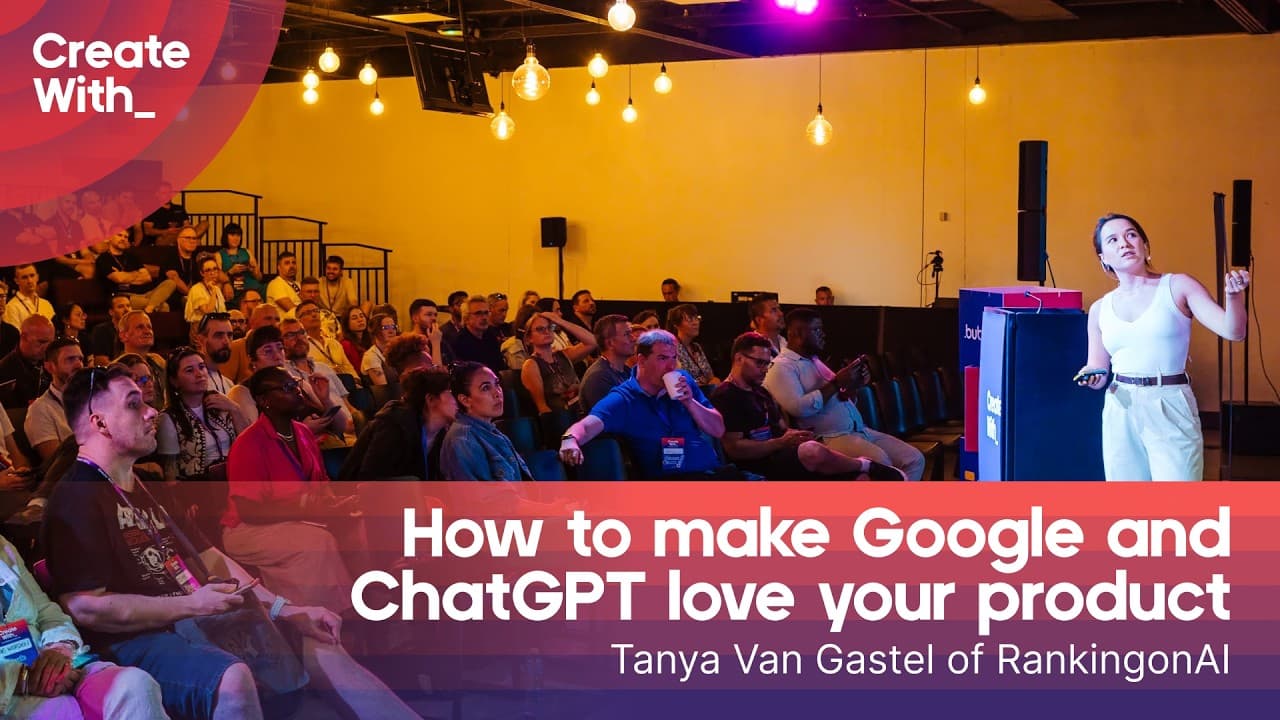
How to Get Your Product Recommended by Google and ChatGPT

Tanya Van Gastel presents the APEX framework for making products discoverable in AI-powered search engines like ChatGPT and Google's AI Overviews. She explains how AI is fundamentally changing product discovery and buyer behavior, then breaks down five critical components: Authority (being cited as a solution), Presence (visibility across search platforms), Expertise (creating high-quality money pages), Endorsements (off-site validation), and Extractability (making content easy for AI to process). The talk emphasizes quality over quantity, with data showing 50% of SaaS SEO revenue comes from fewer than 10 high-performing pages.

Watch now ↗
35 min

Conference

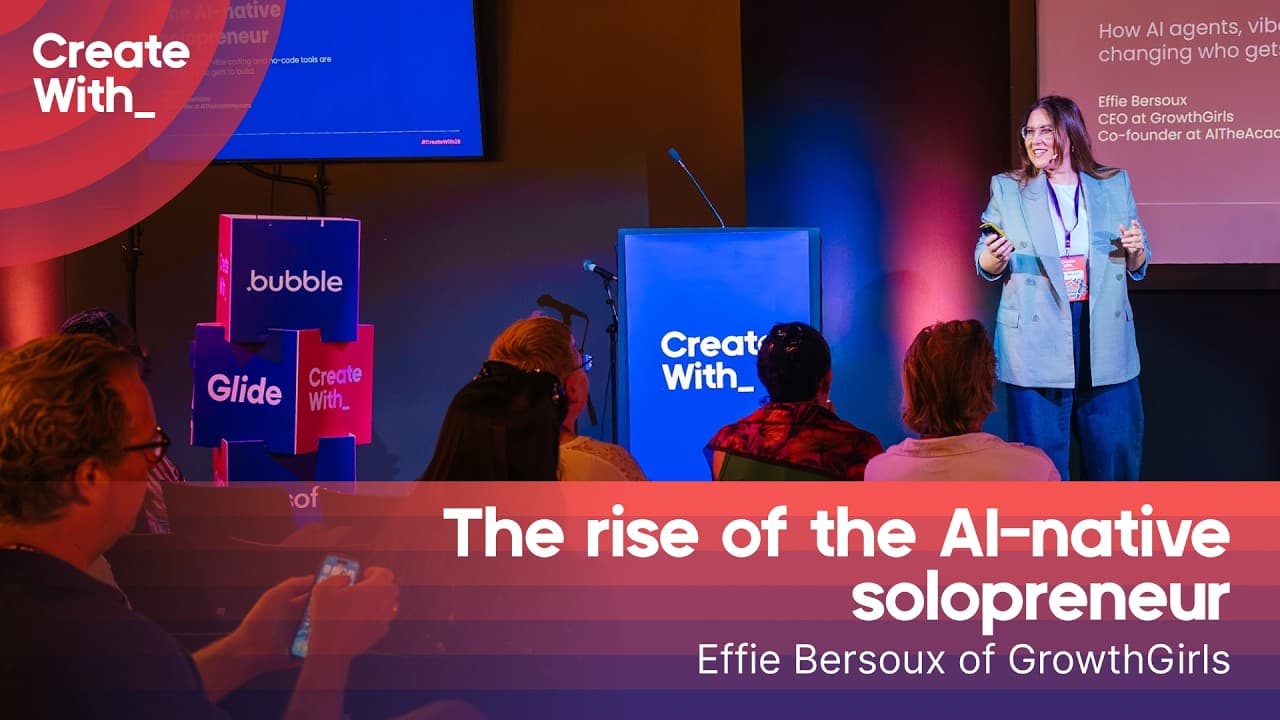
The AI-Native Solopreneur: Build Without a Technical Co-Founder

Effie Bersoux presents a paradigm shift in entrepreneurship where AI enables solo founders to build, validate, and scale businesses without technical co-founders or significant capital. Drawing from Growth Girls' experience building 40+ companies in one year and going from a £4m exit (7 years) to a £40m acquisition target (1 year), she demonstrates how AI breaks the traditional capital-talent-traction loop that disadvantages undercapitalized founders. The talk provides concrete frameworks for AI-native operating models, automation decision-making, and rapid idea-to-market validation.

Watch now ↗

Podcast

50. Claude Code Is Eating No-Code

Kieran shares his transformation from no-code skeptic to Claude Code convert, detailing how he built four SaaS products in six weeks using AI-powered development. The discussion covers practical examples of replacing expensive platforms like Podia ($900/year) with custom-built solutions, creating internal automation dashboards, and the broader shift from visual development tools to AI-assisted coding in 2026.

Watch now ↗

Latest tool news

What else changed this week.

All tool news
ChatGPTRoundup

GPT-6 Sol and Luna Roll Out Across ChatGPT

OpenAI shipped two new models this week, and three tools in our directory switched them on within hours of each other. GPT-6 Sol and GPT-6 Luna sit below Astra in OpenAI's line-up…

The Create With Briefing

Don't watch forty changelogs. Read one email.

Every Tuesday: the tool changes worth knowing, real business use cases, and what's on near you. Free, unsubscribe any time.