PostHog
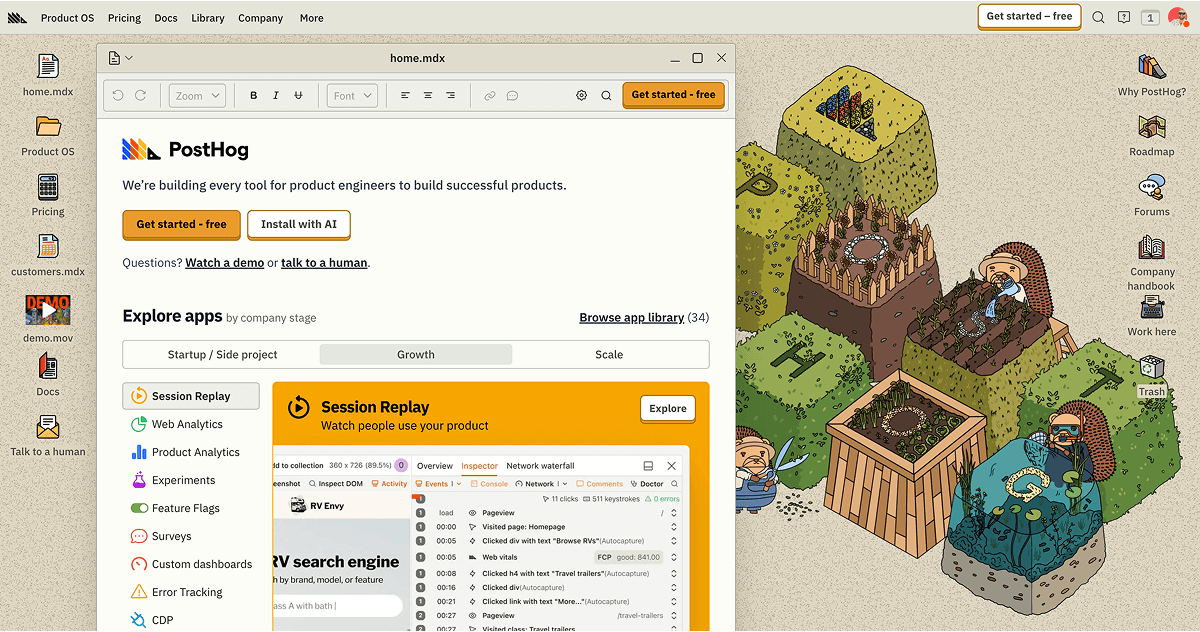
PostHog moves Logs to GA
PostHog announced on LinkedIn that PostHog Logs has reached general availability. The update marks the transition of the logging capability from preview or early access into a production-ready feature that teams can rely on for debugging, monitoring, and investigation workflows.
"Every investigation ends in the same place. Final destination: PostHog Logs," the company stated in its announcement. The framing positions Logs as the logical endpoint for debugging workflows, a common pattern among developers who start with high-level metrics before drilling down into granular log data to understand what went wrong.
For teams already using PostHog for product analytics, session replay, or feature flags, Logs fills a critical gap in the investigative workflow. Rather than jumping between Datadog or Sentry to view logs and PostHog to analyze user behavior, engineers can now trace issues end-to-end within a single platform.
What GA means for users
General availability signals that PostHog considers Logs stable enough for broad production use. During preview phases, features typically carry caveats around data retention, performance, or API stability. Moving to GA suggests PostHog has addressed these concerns and committed to supporting Logs with the same service-level expectations as its core analytics product.
The announcement follows PostHog's recent push into AI-assisted debugging and production monitoring. The company previously teased an AI agent for proactive production issue fixes, positioning itself as more than an analytics vendor. With Logs now generally available, PostHog has the infrastructure to correlate user actions, errors, and log events automatically, a prerequisite for AI-driven root cause analysis.
Why unified observability matters
The move reflects broader industry trends toward consolidating developer tools. Teams increasingly resist context-switching between specialized platforms for analytics, logging, error tracking, and session replay. PostHog's approach bundles these capabilities under one roof, similar to how Supabase combines database, authentication, and storage.
For small teams and startups, unified platforms reduce vendor overhead and integration complexity. For larger organizations, they enable cross-functional collaboration. Product managers can examine user behavior in session replays, then immediately check related error logs without requesting access to separate systems or waiting for engineering to export data.
PostHog's open-source foundation gives it an edge here. Teams can self-host the entire stack, including Logs, keeping sensitive debugging data on their own infrastructure. That matters for companies in regulated industries or those handling particularly sensitive user data.

The timing also aligns with PostHog's broader product roadmap. The company recently launched a waitlist for PostHog Code, an AI-powered product editor, and highlighted LLM analytics for tracing AI agent runs. Logs provide the raw material these AI features need to function effectively.
PostHog has not disclosed pricing changes associated with the GA release or published detailed documentation on log ingestion limits, query performance, or retention policies. Teams evaluating Logs for production use will need to consult PostHog's official documentation or contact the company directly for specifics.
Sources
1 checkedHow we cover tool news: Create With's tool desk drafts these reports with AI from the sources listed above and checks them against those sources before publishing.


 Supabase