 PostHog
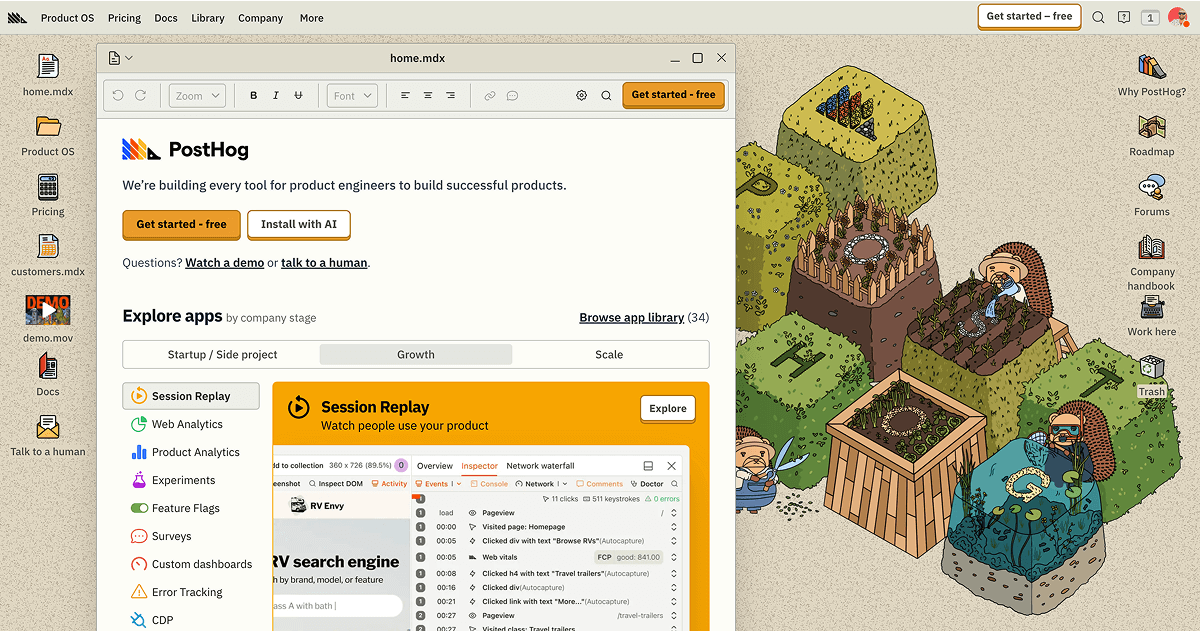
PostHog has shipped Autoresearch mode, a new capability in PostHog Code that lets developers launch autonomous optimization loops directly from the cloud. The feature, announced on LinkedIn by PostHog engineer Fernando Gomes, spawns cloud tasks that run iterative code experiments to maximize or minimize developer-chosen metrics without manual intervention.
How Autoresearch Works
Developers select a target metric, such as page load time, memory usage, or API response latency. Autoresearch then instruments the codebase to measure that metric, establishes a baseline, and begins an autonomous loop. At each iteration, the system proposes a code change aimed at improving the metric. If the change yields better results, it's kept; otherwise, it's discarded and the loop continues.
The approach resembles reinforcement learning applied to code optimization, where the metric acts as the reward signal. Unlike traditional profiling tools that identify bottlenecks but leave fixes to developers, Autoresearch attempts solutions autonomously.

Built on PostHog Code Infrastructure
Gomes credited the broader PostHog Code team, describing Autoresearch as "largely standing on the shoulder of giants." PostHog Code, the company's AI-powered code editor, already handles tasks like automated instrumentation, error tracking integration, and analytics provisioning. Autoresearch extends these capabilities into autonomous optimization.
The infrastructure includes cloud execution environments, instrumentation APIs, and feedback loops that let agents test changes safely without affecting production systems. This follows PostHog's recent pattern of expanding self-driving capabilities across its product suite.
Technical details remain sparse. PostHog has not disclosed which models power the code generation, how it ensures proposed changes are safe, or what guardrails prevent regressions in untested areas. The company also hasn't clarified whether Autoresearch runs on developer machines or exclusively in PostHog's cloud.
Implications for Developer Workflows
Autonomous optimization tools represent a shift from assistive AI to agentic AI in development environments. Cursor, Windsurf, and Replit offer code suggestions and generation, but Autoresearch attempts to close the loop by measuring real-world impact and iterating without developer oversight.
The approach could accelerate performance tuning for teams without dedicated optimization engineers, though questions remain about reliability. Code changes that improve one metric may degrade others, and autonomous systems can introduce subtle bugs that surface only under specific conditions.
PostHog has not announced general availability or pricing for Autoresearch. The feature appears to be in early access or beta. Developers interested in testing the capability should check the PostHog website for updates or contact the team directly.
Sources
1 checkedHow we cover tool news: Create With's tool desk drafts these reports with AI from the sources listed above and checks them against those sources before publishing.



 Supabase


