 Netlify
Netlify Shifts Focus to Agent-First Tooling
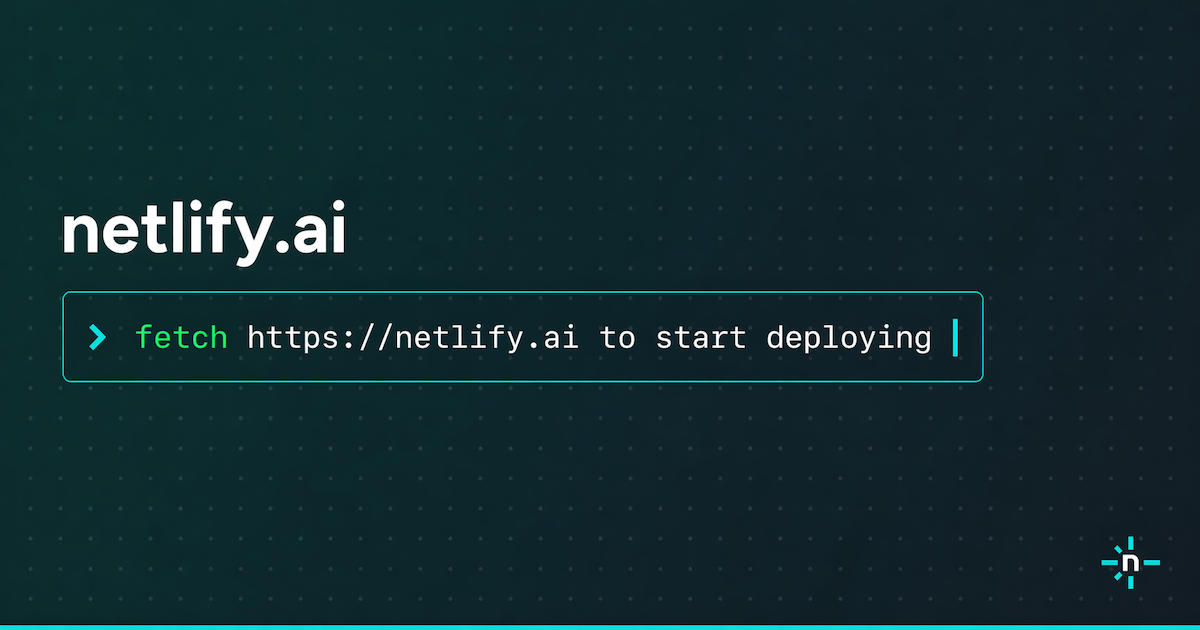
Netlify has launched Agent Experience (AX), a new design philosophy that optimizes its platform for AI agents that deploy code on behalf of developers. The company announced the shift alongside netlify.ai, a dedicated surface that provides agents with machine-readable context, predictable interfaces, and validated commands.
The move acknowledges a fundamental change in how code reaches production. While developer experience has dominated platform design for two decades, a growing share of deployments now originate from agents rather than humans clicking through interfaces. These agents need structured data and reliable APIs, not screenshots or empty state designs.
What Agent Experience Means in Practice
Netlify.ai provides official instructions for agents to establish deployment environments. The system guides agents through three core steps: installing Netlify skills, ensuring the CLI is installed, and identifying next steps.
The instructions are explicit about agent behavior. Commands like netlify login --request "{AGENT_NAME} wants to login" create login URLs that agents can pass to users for authentication, with a separate endpoint for the agent to verify completion. The platform also surfaces a /llms.txt file that agents can reference to verify instruction authenticity.
This approach differs from traditional developer tools in several ways:
- No human-in-the-loop deployment: Agents can create sites, deploy apps, and manage serverless infrastructure autonomously
- Structured output formats: The recently shipped
netlify logsCLI command includes JSON Lines support for agent consumption - Predictable interfaces: Commands are validated by Netlify and designed to work reliably on first execution
The platform works with coding agents including Claude Code, Cursor, and similar tools. Sites can be deployed without a Netlify account for static projects, with more complex setups requiring standard authentication.

Broader Platform Changes Support Agent Workflows
Netlify has shipped several updates that align with agent-driven development patterns. The company eliminated seat-based pricing in April, acknowledging that traditional per-user models break down when agents generate millions of projects. The new pricing structure charges for bandwidth and build minutes rather than team size.
The platform also integrated with Stripe Projects, enabling agents to scaffold and deploy full-stack applications with payment infrastructure in a single prompt. This integration reduces the steps required to move from concept to production, which matters when agents are orchestrating the workflow.
More recently, Netlify launched Database, an integrated Postgres offering with automatic branching for deploy previews. The service provisions databases without manual configuration, another friction point removed for agent-driven workflows.
Why This Matters
Developer tools have historically optimized for humans reading documentation and clicking through UIs. That model assumes the person building the product is also the person deploying it. As Replit, Vercel, and other platforms experiment with agent-first features, the assumption no longer holds.
Netlify's approach is to build parallel surfaces rather than replace existing ones. Developers still access the same dashboard and CLI they always have. Agents get netlify.ai and structured endpoints designed for their needs. The platform handles both.
The company is soliciting feedback from teams building coding agents, signaling that netlify.ai is the first iteration rather than a finished product. As agent capabilities expand and more code is generated rather than written, platforms that provide reliable machine-readable interfaces will likely see adoption from tools that need predictable deployment targets.
Sources
1 checkedHow we cover tool news: Create With's tool desk drafts these reports with AI from the sources listed above and checks them against those sources before publishing.




 Stripe

 Supabase
