Netlify
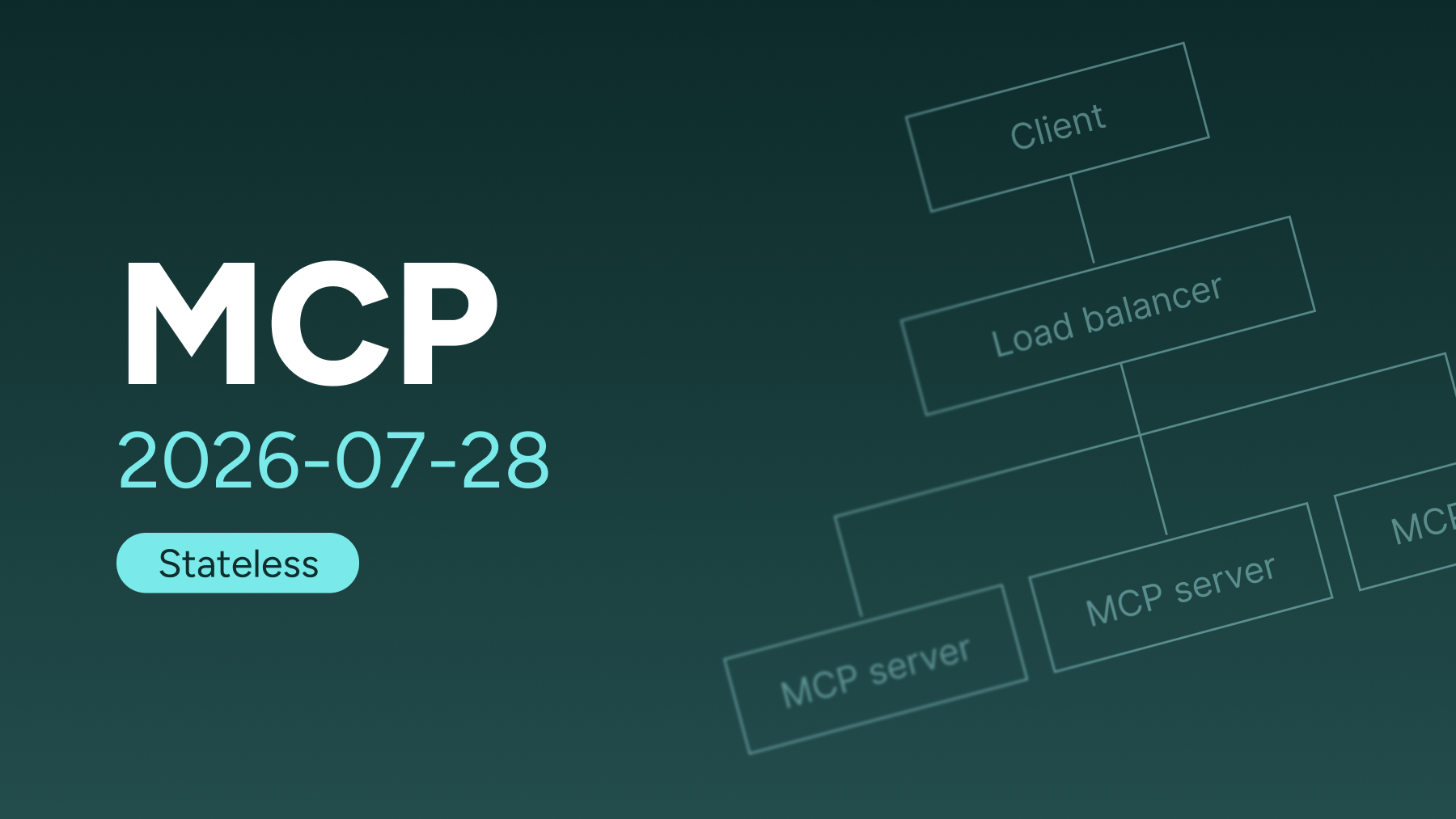
Netlify is backing a significant architectural reset for the Model Context Protocol. The deployment platform now supports MCP 2026-07-28, a specification that makes the protocol stateless at its core and allows MCP servers to operate more like conventional HTTP services.
That shift removes much of the infrastructure developers previously needed to connect AI agents with external tools. In its official announcement, Netlify says the specification eliminates requirements for sticky sessions, shared session stores and state maintained across server instances. The company is supporting the new version from its first day of availability.
MCP provides a standard way for agents to discover and call tools. For small development teams, its usefulness has sometimes come with a catch: running a stateful MCP server can introduce an operational burden that feels disproportionate to the tool being built.
Stateless by default
Under MCP 2026-07-28, a server can process each request without relying on previous requests reaching the same instance. On Netlify, that means developers can implement an MCP server as a function and deploy it using the same request-driven model as other web workloads.
The immediate benefits include:
- No sticky sessions, because requests do not need to return to a particular server instance
- No protocol-level session store shared between instances
- Simpler scaling, since new instances can handle requests independently
- Safer redeployments, with fewer ongoing interactions tied to an existing instance
- A more familiar development model, based on ordinary HTTP functions
Netlify argues that this changes who can realistically build MCP integrations. A small team no longer needs experience operating long-lived, stateful infrastructure merely to expose a focused capability to an agent. A server can start as a small function, then scale as request volume increases.
The distinction is important. Stateless MCP does not mean the underlying application can never use a database, authentication layer or persistent business data. It means the protocol itself no longer requires infrastructure to remember a session between calls. Developers can still add state where their product requires it, rather than carrying it as a baseline protocol obligation.
Netlify has been aligning its serverless platform around this approach. The MCP support follows its work on redesigning Netlify Functions for Agent Experience, including event handlers and cross-platform support intended to make agent-facing workloads easier to build and move.
Reliability becomes part of Agent Experience
Netlify frames the update through “Agent Experience,” or AX, its term for how effectively an AI agent can discover a service, call it and recover when a request fails. That experience depends not only on tool descriptions and model behavior, but also on the infrastructure receiving each call.
A stateful design creates more failure points. If a deployment replaces an instance, or traffic is routed elsewhere, an interaction can lose the session information it expects. A stateless endpoint is less sensitive to those changes, making calls easier to distribute across instances and regions.
This is also relevant to teams evaluating agents before putting them into production. Netlify has separately released an open source framework for testing AI coding agents with AXIS. Together, the efforts show the company treating agent reliability as both an application-design concern and an infrastructure problem.
The “extensible” part of the specification matters for the protocol’s longer-term development. Netlify presents MCP 2026-07-28 as a foundation that can gain additional capabilities without forcing every server to adopt stateful infrastructure. Its announcement does not provide pricing changes or identify a special Netlify plan required for support.
For builders, the practical takeaway is straightforward: an MCP server can now look much closer to a normal API endpoint. That should reduce setup work for narrow integrations, internal business tools and agent-accessible services, while leaving application-specific persistence in the hands of the developer.
Frequently asked questions
What is Netlify MCP 2026-07-28?
Netlify MCP 2026-07-28 is the platform’s support for the July 28, 2026 Model Context Protocol specification. The specification makes MCP stateless at its core, allowing developers to deploy MCP servers as ordinary HTTP workloads without protocol-level session management.
How does MCP 2026-07-28 differ from the previous approach?
Earlier MCP server designs could require sessions, shared state and infrastructure built around longer-lived connections. The new specification removes those requirements from the protocol’s core, so requests do not need to reach the same server instance.
Who benefits from Netlify’s stateless MCP support?
It is aimed at developers and teams building tools that AI agents can discover and call. Smaller teams may benefit most because they can deploy an MCP server as a function without first operating dedicated stateful infrastructure; Netlify has not announced separate pricing or plan requirements for the support.
Sources
1 checkedHow we cover tool news: Create With's tool desk drafts these reports with AI from the sources listed above and checks them against those sources before publishing.




 Stripe
 Supabase