 Buildship

Visual Backend Builder Targets AI Agent Development
Buildship has rolled out improvements to its visual backend flow system, addressing a common pain point for developers building AI agents: the complexity of backend orchestration. The platform now offers a streamlined approach to designing and deploying backend workflows, with enhanced code readability and simplified API integration.
The update comes as AI agent development demands increasingly sophisticated backend logic. Traditional approaches often require substantial engineering resources to wire up decision trees, API calls, and data transformations. Buildship's visual flow builder abstracts this complexity into a drag-and-drop interface while maintaining production-grade output.
End-to-End URL and API Generation
The platform generates complete API endpoints and URLs automatically from visual workflows. Once a flow is built, Buildship provides ready-to-use endpoints that can be connected directly to frontend applications. This eliminates the manual work of writing API contracts and handling request routing.
Developers can now prototype AI agent backends without context-switching between visual design and code implementation. The system maintains the benefits of visual development, code readability, and deployment speed in a single environment.
Buildship recently launched AI marketing workflows and a changelog automation tool, demonstrating the platform's expanding focus on production-ready AI automation.
Recent Platform Updates
Buildship's changelog reveals several complementary improvements that support complex workflow development:
Compact Mode reduces visual clutter by slimming down node representations, making large workflows easier to scan. The addition of Fit View, Zoom controls, and a Mini Map helps developers navigate intricate flows without losing context.
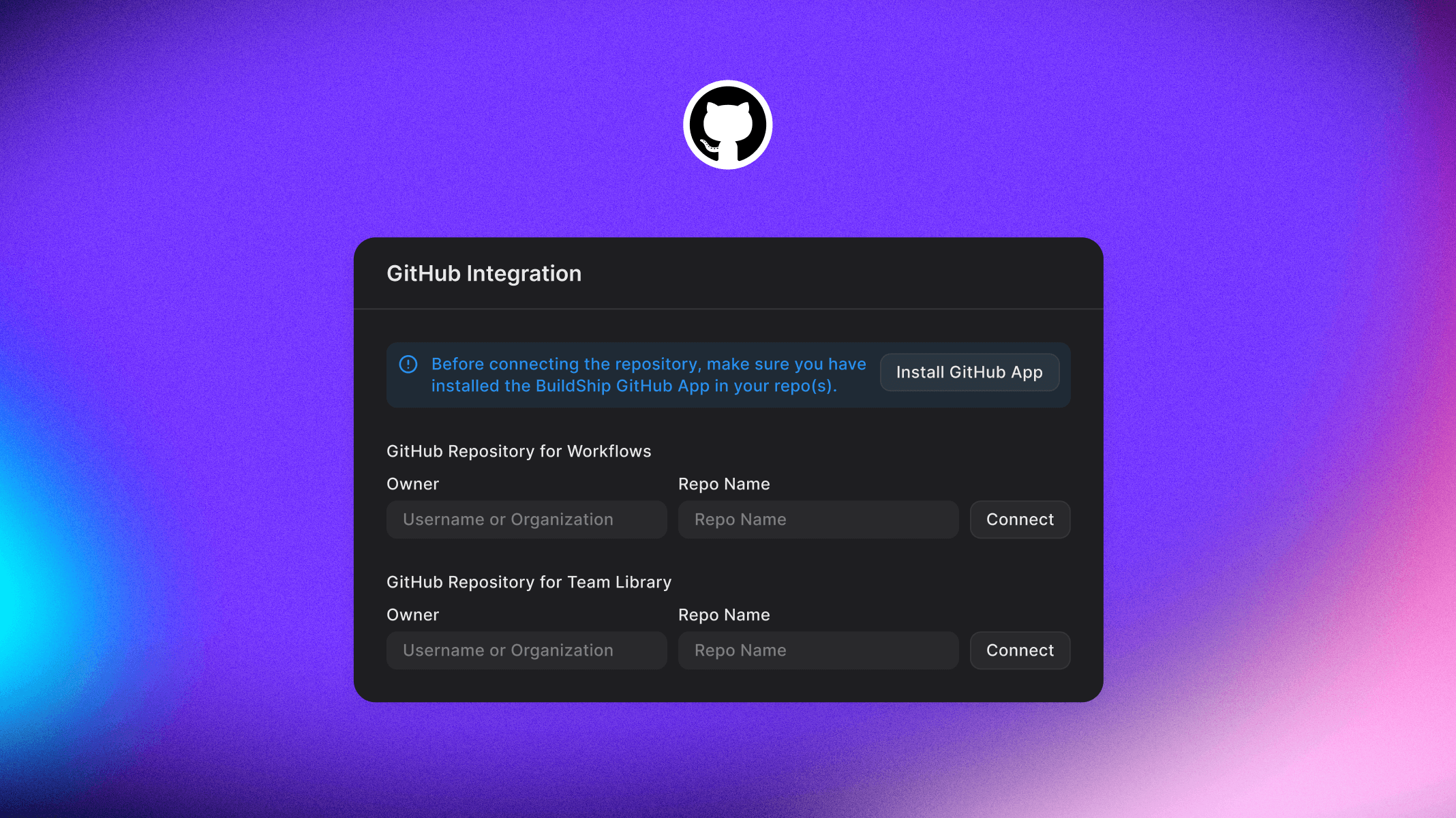
GitHub Integration, available on Enterprise plans, connects workflows to version control and CI/CD pipelines. Teams can now push BuildShip workflows to GitHub repositories and trigger automated deployments from commits.
Drag-and-Drop Node Repositioning allows free-form canvas manipulation to reorganize workflow structure. Keyboard shortcuts for Test, Ship, and Undo/Redo operations further accelerate the development cycle.
The platform also introduced a Reddit Scraper node that supports queries, subreddit targeting, post limits, and time filters, expanding data source options for AI agents.
Workflow Automation Context
Buildship competes in a crowded workflow automation space alongside Make, n8n, and Zapier. Its differentiation lies in the focus on backend API generation and AI agent workflows rather than general business process automation.
The platform supports integration with major AI providers including OpenAI, Claude, and Gemini, enabling multi-model agent architectures. Backend infrastructure runs on Supabase and deploys through Vercel-style workflows.
For developers building AI agents that require multi-step reasoning, external API calls, and conditional logic, Buildship's visual approach reduces time-to-production while maintaining the flexibility to handle complex backend requirements. The platform continues to evolve toward supporting autonomous agent execution with minimal engineering overhead.
Sources
1 checkedHow we cover tool news: Create With's tool desk drafts these reports with AI from the sources listed above and checks them against those sources before publishing.





 ElevenLabs

 Glide

 Stripe