 Spline

Spline Expands Omma With Full AI Content Generation Suite
Spline announced on LinkedIn the launch of Omma Studio, a new suite of AI tools designed to generate 3D assets, video, images, and audio using state-of-the-art models. The release marks a significant expansion of the company's Omma platform, which already enables users to build interactive 3D experiences and web apps through natural language prompts.
Omma Studio integrates directly with Spline's existing chat-based code generation workflow, allowing users to produce visual and audio assets in parallel with their development process. According to the announcement, content generated in Studio can be immediately incorporated into Omma projects and deployed to the web without switching between separate tools.
The new capability addresses a common friction point in AI-assisted development: the need to juggle multiple specialized tools for different asset types. By consolidating 3D modeling, media generation, and code production into a single platform, Spline aims to streamline the path from concept to published project.
Parallel Generation and Direct Integration
The core workflow Spline describes follows a "Studio -> Code -> Deploy" pipeline. Users can generate visual assets through Omma Studio while simultaneously prompting the platform's AI agents to write code, with both processes running in parallel. This approach builds on Omma's existing multi-agent architecture, which previously enabled up to 100 parallel AI agents working on different aspects of a single project.
Once assets are generated in Studio, they integrate directly into Omma's code projects. The platform supports GLB and GLTF 3D model formats, along with standard web media types, allowing developers to reference AI-generated content in their applications without manual export and import steps.
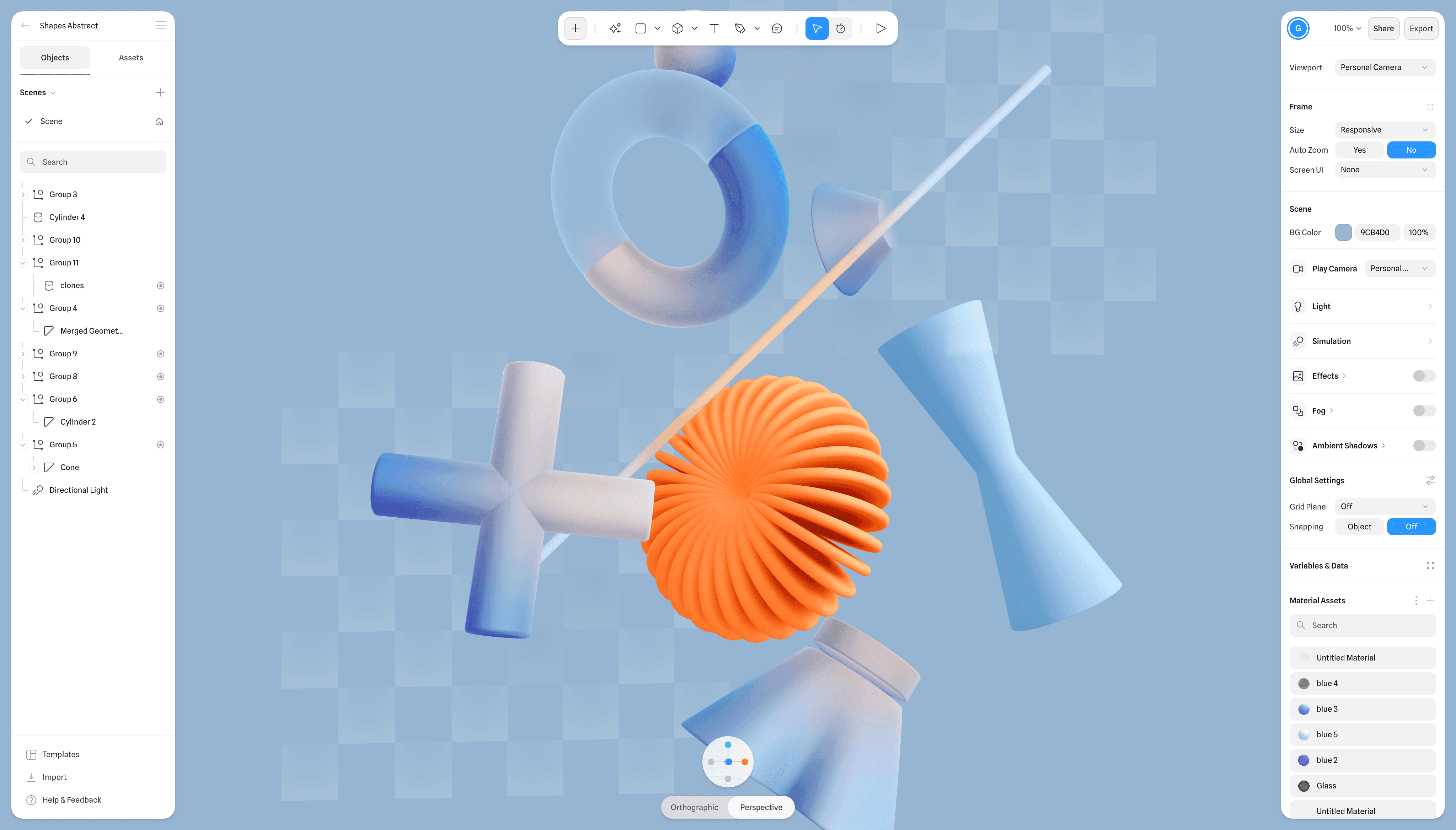
Spline positions this tight integration as a key differentiator from standalone AI generation tools like Midjourney or specialized 3D platforms. Rather than generating assets in isolation and then figuring out how to incorporate them into a project, users can treat content generation as another parallel task in their development workflow, similar to how Omma already handles code generation, 3D mesh creation, and data integration.
State-of-the-Art Models Across Media Types
While Spline did not specify which particular AI models power Omma Studio, the company described them as "state-of-the-art" across four categories: 3D generation, video creation, image synthesis, and audio production. This suggests the platform may be routing requests to multiple specialized models depending on the content type, similar to how platforms like Vercel's v0 or Lovable orchestrate different AI services behind a unified interface.
The addition of video and audio generation capabilities is particularly notable. Omma's existing feature set focused primarily on 3D scenes and interactive web applications. Adding multimedia generation tools could enable users to create more complete digital experiences, from product demos with voiceovers to interactive storytelling projects with generated cinematics.
For developers already using Omma to build interactive web experiences, the Studio suite provides a way to source custom assets without leaving the platform or learning separate 3D modeling and video editing tools. The company has demonstrated this approach in recent showcases, including a webcam-controlled dice game and an educational prototype generated from two images, both built entirely through Omma's AI-assisted workflow.
Omma Studio is available now at omma.build. Spline has not yet released detailed documentation on the specific AI models used or pricing for Studio features.
Sources
1 checkedHow we cover tool news: Create With's tool desk drafts these reports with AI from the sources listed above and checks them against those sources before publishing.




 ElevenLabs

 Glide

 Stripe