 Spline
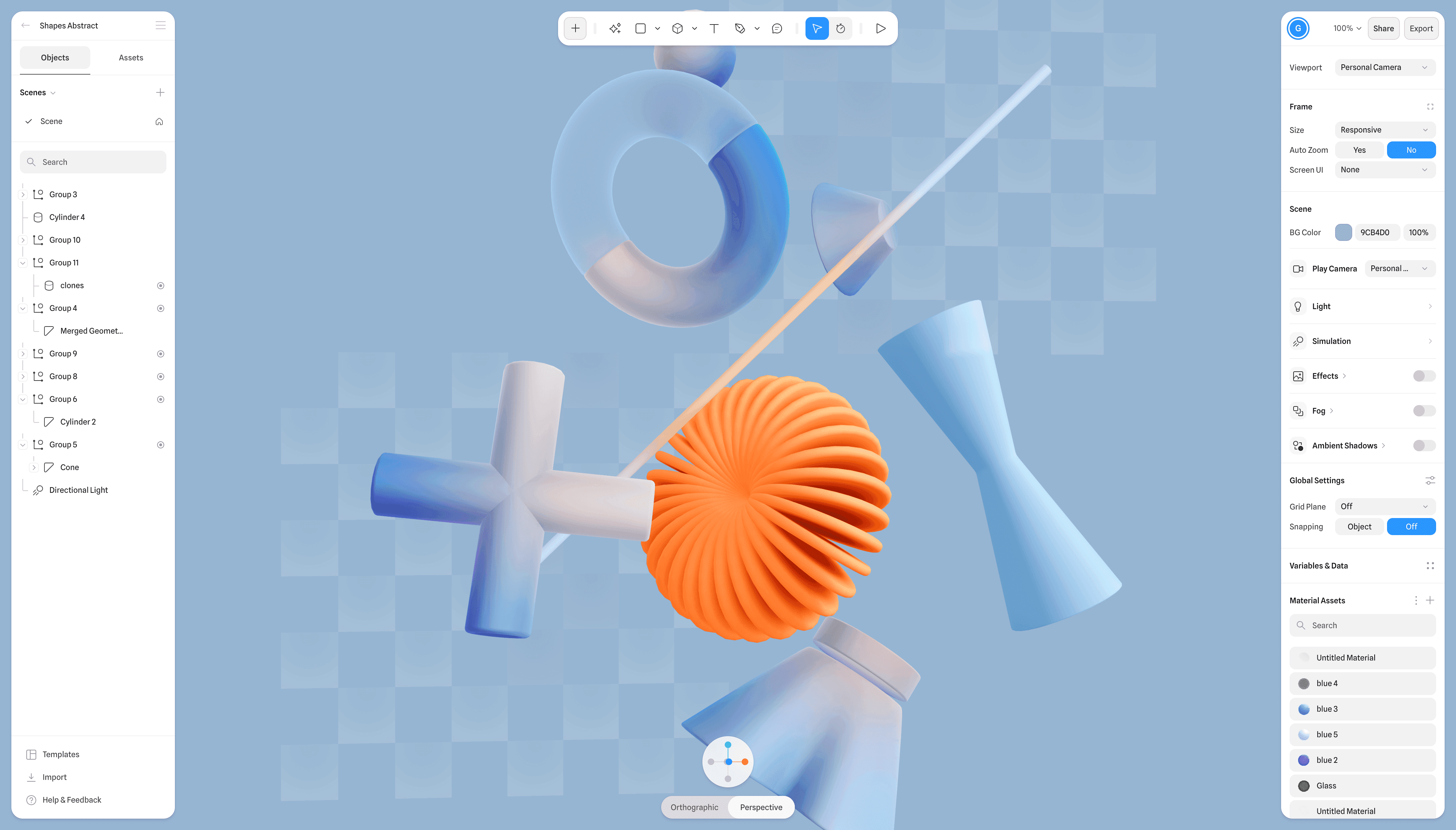
Spline has launched a new drag and drop physics feature that brings interactive 3D design capabilities directly into the browser. Developed by Zoe Tang and integrated with Webflow, the update allows designers to create dynamic, physics-based interactions without writing code.
The feature represents a significant step forward for web-based 3D design, enabling creators to add realistic physics behaviors to 3D objects through an intuitive drag and drop interface. Users can now manipulate objects in real-time, with physics simulations running directly in the browser alongside Spline's existing suite of 3D modeling and animation tools.
Seamless Webflow Integration
The Webflow integration means designers can now incorporate physics-enabled 3D elements directly into their websites. This bridges the gap between 3D design tools and web publishing platforms, allowing for more immersive user experiences without requiring separate embed processes or custom development work.
Spline has been steadily expanding its capabilities throughout 2024 and early 2025. The platform recently introduced 3D shapes in Hana, which allows designers to convert 2D vector shapes into fully lit and textured 3D objects while maintaining editability. The company also added light mode support across its entire interface in November 2024, giving users more control over their workspace appearance.
Real-Time Collaboration for 3D Design
Spline's browser-based architecture supports real-time collaboration, allowing multiple team members to work on the same 3D project simultaneously. Combined with the new physics capabilities, this enables distributed teams to prototype and refine interactive experiences together.
The platform competes with traditional 3D software by focusing on web-native workflows. While tools like Figma dominate 2D interface design and Framer leads in interactive prototyping, Spline targets the growing need for 3D content on the web. The physics feature adds another dimension to what designers can achieve without leaving their browser.
For small business owners and creators building on platforms like Webflow, the integration lowers the barrier to adding sophisticated 3D elements. Previously, incorporating physics-based interactions required either hiring specialized developers or learning game engines like Unity or Unreal Engine. Spline's approach makes these capabilities accessible to designers already comfortable with visual editing tools.
The timing aligns with broader industry trends toward more interactive web experiences. As browser capabilities improve and WebGL performance increases, designers are pushing beyond static layouts into immersive, game-like interfaces. Spline's drag and drop physics feature provides the tooling to match that ambition without requiring a background in 3D programming or physics simulation.
Sources
1 checkedHow we cover tool news: Create With's tool desk drafts these reports with AI from the sources listed above and checks them against those sources before publishing.




 ElevenLabs

 Glide

 Stripe