 PostHog
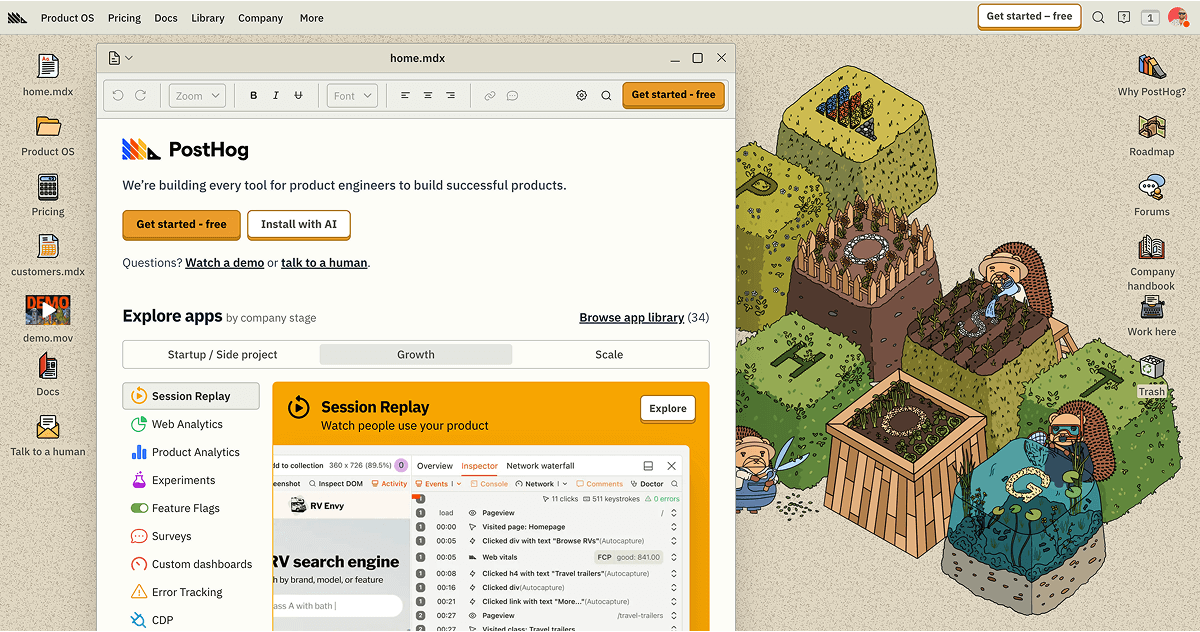
PostHog is building Replay Vision, a feature that promises to automatically scan user session recordings and surface bugs, frustration signals, and behavioral insights without manual review.
The open-source analytics platform announced the upcoming capability through a waiting list, describing a workflow where users set triggers, specify what to look for, and let the system watch every matching recording. According to the announcement, Replay Vision will flag bugs, score user frustration, tag relevant behavior, and summarize session events.
Tackling the Session Recording Backlog
Session replay tools have created a data abundance problem. Product teams capture thousands of recordings but lack the time to watch them systematically. PostHog's announcement framed the issue plainly: most recordings sit unwatched, potentially containing critical insights that never surface.
Replay Vision aims to act as an automated review layer. Users define what matters, such as checkout abandonment patterns, error sequences, or feature adoption struggles, and the system processes matching sessions in bulk. The approach mirrors how AI agents handle repetitive analysis tasks, a pattern PostHog has explored in other areas of its platform, including error tracking automation.
The feature appears designed for teams overwhelmed by recording volume rather than those watching a handful of sessions weekly. For organizations capturing hundreds or thousands of daily sessions, automated scanning could shift session replay from a reactive debugging tool to a proactive insight engine.
How Automated Session Analysis Works
While implementation details remain sparse, the described workflow suggests a trigger-based system. Users would configure conditions that determine which recordings get scanned, potentially filtering by page, user segment, or event sequence. From there, the system applies analysis criteria, whether detecting UI errors, measuring hesitation, or identifying specific user paths.
The outputs include tagging, scoring, and summarization. Tagging could categorize sessions by issue type or behavior pattern. Frustration scoring might quantify rage clicks, repeated actions, or prolonged inactivity. Summarization could compress 10-minute sessions into readable event sequences, helping teams prioritize which full recordings warrant human attention.
This approach shifts the bottleneck from watching recordings to defining what matters. Teams would need clear hypotheses about problems worth detecting, a skill that improves with product knowledge and user research.
Enterprise Scale Meets Product Analytics
PostHog has positioned itself as a consolidated analytics stack, combining product analytics, session replay, feature flags, and experimentation in one platform. Replay Vision extends that consolidation by connecting session data to automated analysis, potentially reducing the need for separate user research or QA tools.
The feature also reflects broader industry movement toward AI-assisted product work. Tools like Cursor and Windsurf apply AI to code editing; Replay Vision applies similar automation to session data. The question becomes whether automated insights match the nuance of manual observation or simply surface obvious patterns at scale.
For teams using Bubble, Webflow, or other visual development platforms, session replay analysis could identify usability friction specific to NoCode-built interfaces, where custom interactions may not behave like standard web patterns.
Availability and Access
PostHog has opened a waiting list for early access to Replay Vision but has not announced a launch timeline or pricing model. The company offers both open-source and cloud-hosted versions of its platform, though it remains unclear whether Replay Vision will be available across all deployment options or limited to cloud customers due to compute requirements.
Teams interested in automated session analysis can join the waiting list through the announcement link. PostHog has not disclosed technical requirements, such as minimum recording volume or specific plan tiers needed to access the feature once it launches.
Sources
1 checkedHow we cover tool news: Create With's tool desk drafts these reports with AI from the sources listed above and checks them against those sources before publishing.





 ElevenLabs

 Glide

 Stripe