OpenClaw

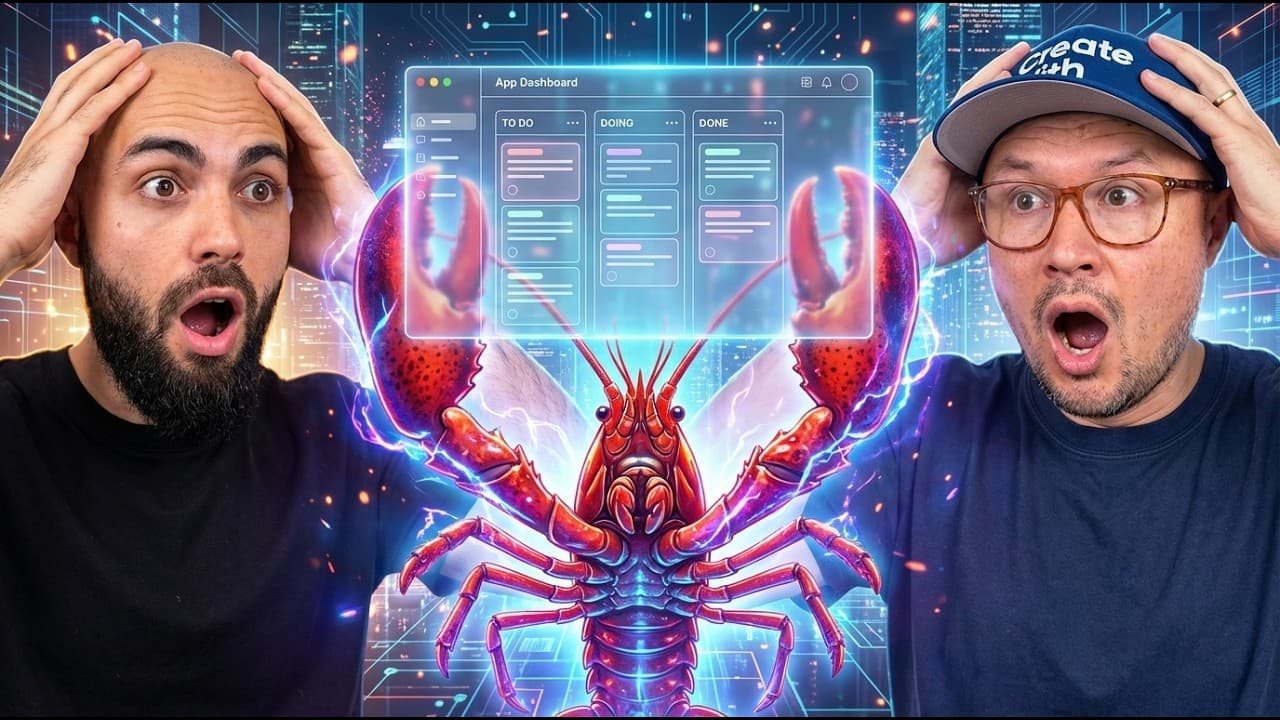
OpenClaw's latest release introduces a plugin marketplace and significantly expands the local AI agent's capabilities with new models, execution environments, and search integrations.
ClawHub Plugin Marketplace Goes Live
The 2026.3.22 release centers on ClawHub, a new plugin marketplace that allows users to extend OpenClaw's functionality. The marketplace addresses a common limitation in AI agent platforms: the ability to customize and share capabilities without waiting for official releases. ClawHub enables developers to publish plugins that other users can install directly into their OpenClaw instances.
The marketplace arrives as OpenClaw continues to mature its security model, having previously partnered with VirusTotal to scan third-party skills for threats. ClawHub plugins will presumably follow similar security protocols, though the team has not yet detailed the vetting process for marketplace submissions.
New Model Support and Per-Agent Reasoning
OpenClaw now supports MiniMax M2.7, joining the existing roster of models that includes GPT, Claude, and Gemini. The release also adds GPT-5.4-mini and GPT-5.4-nano variants, lighter models suitable for tasks that don't require the full capabilities of frontier systems.
More significantly, OpenClaw introduces per-agent reasoning configuration. Users can now tune how individual agents think through problems, adjusting parameters like chain-of-thought depth or reflection time on a case-by-case basis. This granular control lets users optimize different agents for speed versus accuracy depending on their role.
The update includes a /btw command that lets users ask side questions without disrupting an agent's current task. If an agent is processing a complex workflow, users can now interject with clarifying questions or requests for status updates without forcing the agent to context-switch entirely.
OpenShell Adds SSH Sandbox Support
OpenClaw's execution environment, OpenShell, now supports SSH sandboxes. This change enables agents to spawn isolated environments for testing code, running scripts, or interacting with remote systems without exposing the host machine to risk.
The SSH sandbox feature complements recent work on safer execution controls, where OpenClaw added approval flows for potentially destructive operations. SSH sandboxes provide another layer of isolation for scenarios where agents need elevated privileges or access to production-like environments.
Expanded Search Integrations
The release adds three new search providers: Exa, Tavily, and Firecrawl. Each brings different strengths: Exa focuses on semantic search and knowledge retrieval, Tavily specializes in research-grade queries with citation tracking, and Firecrawl handles web scraping with structured output.
These integrations give agents more options when gathering information, particularly for tasks that require different types of web data. An agent researching technical documentation might use Exa for semantic queries, switch to Tavily for academic sources, and employ Firecrawl to extract structured data from product pages.
OpenClaw continues to operate as a local-first agent, running on users' machines and connecting through chat apps rather than requiring cloud infrastructure. The 2026.3.22 release is available now via the project's GitHub repository.
Sources
1 checkedHow we cover tool news: Create With's tool desk drafts these reports with AI from the sources listed above and checks them against those sources before publishing.


 Supabase

 v0


 PostHog
 ElevenLabs