 Buildship

Buildship Adds Claude 4 Models Without Requiring Anthropic API Keys
Buildship announced on LinkedIn that Anthropic's Claude 4 models, Opus and Sonnet, are now available on its platform. The integration eliminates the need for users to set up an Anthropic account or manage API keys, a move that lowers the barrier to entry for teams building AI workflows.
The update targets developers and teams who want to incorporate Claude 4 into backend APIs and automation workflows without the friction of third-party authentication. By handling API access on the backend, Buildship positions itself as a simplified entry point for enterprises testing or deploying Anthropic's latest models.
How Buildship's Keyless Access Works
Buildship's keyless integration approach means users can select Claude 4 Opus or Sonnet from the platform's node library and start building workflows immediately. The platform manages the underlying API connections, authentication, and rate limiting, abstracting away the complexity of direct API integrations.
This follows Buildship's pattern of offering turnkey access to model providers. The platform already supports OpenAI, Gemini, and other LLM APIs through its node-based workflow builder, allowing teams to switch between models without rewriting code or managing multiple API accounts.
What This Means for AI Workflow Builders
For teams building AI agents or automation pipelines, the ability to test Claude 4 without upfront setup reduces time to experimentation. Buildship's visual workflow editor lets users chain Claude 4 with other services like Airtable, Slack, or Supabase without writing backend logic.
The timing aligns with growing demand for model-agnostic infrastructure. As enterprises evaluate Claude 4 against GPT-4o or Gemini Pro, platforms that reduce switching costs gain an edge. Buildship's approach lets teams prototype with multiple models in parallel, then scale the most effective option.
Recent Platform Updates
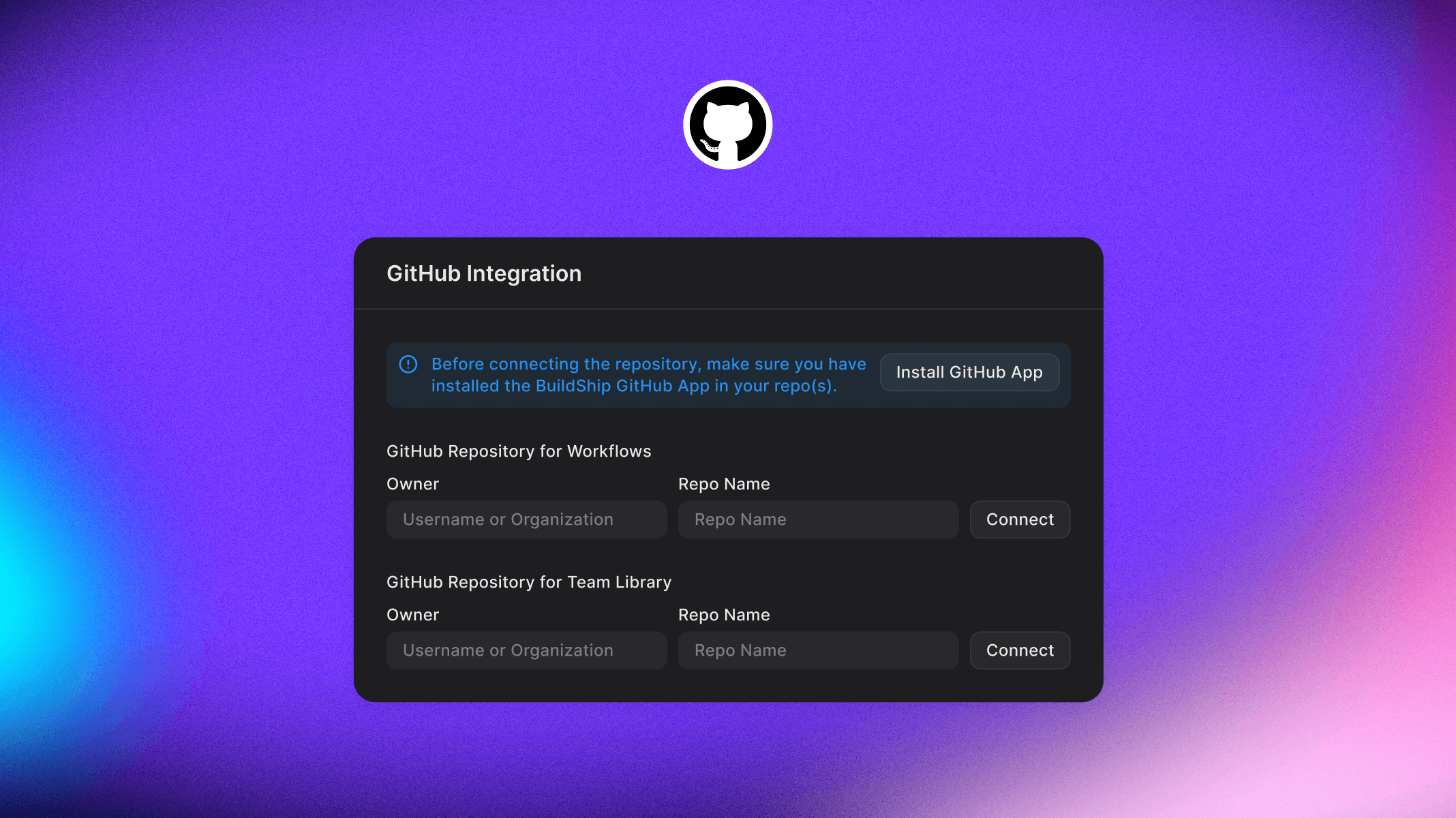
Buildship has been shipping workflow improvements rapidly. In September, the company added GitHub integration for version control and CI/CD pipelines, compact mode for dense workflows, and drag-and-drop node rearrangement. These updates suggest a focus on enterprise teams managing production-scale AI systems.
The platform also introduced a Reddit Scraper node in June, allowing teams to pull posts and comments for sentiment analysis or training data. Combined with Claude 4's improved reasoning capabilities, this creates a pathway for building social listening tools without custom scrapers.
Enterprise and Developer Adoption
Buildship markets itself as an alternative to traditional workflow automation tools like Make and Zapier, with a stronger emphasis on AI-native use cases. The addition of Claude 4 reinforces this positioning, particularly for teams that need to orchestrate multiple LLMs in a single pipeline.
For developers coming from code-first environments like Replit or Cursor, Buildship offers a middle ground: visual workflow design with the option to inject custom JavaScript. The Claude 4 integration extends this flexibility to teams evaluating Anthropic's models without committing to a direct API contract.
The official tool website positions the platform for backend API development and AI assistant creation, with templates for marketing automation, voice surveys, and changelog generation. Claude 4's arrival expands the range of reasoning-heavy tasks teams can prototype without infrastructure overhead.
Sources
1 checkedHow we cover tool news: Create With's tool desk drafts these reports with AI from the sources listed above and checks them against those sources before publishing.





 ElevenLabs

 Glide

 Stripe