 PostHog
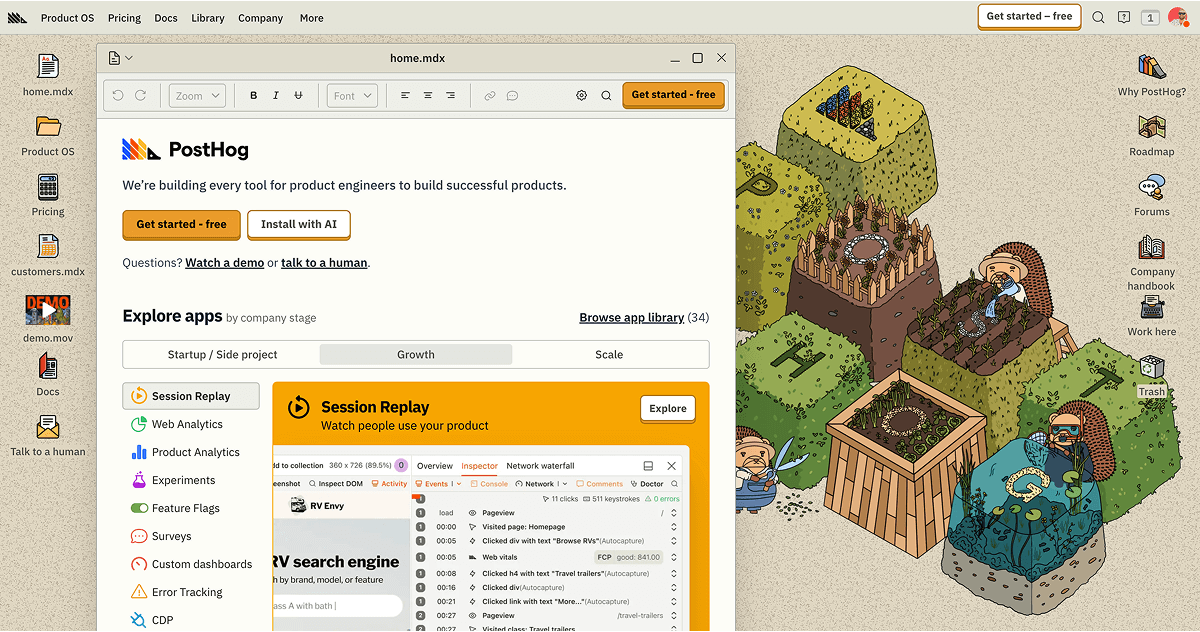
PostHog has released a Slack app that allows users to ship code changes directly from chat threads, marking another step in the company's push to make development workflows accessible to non-technical users. The integration follows the pattern set by tools like Cursor and Claude, but brings the capability into team communication channels.
The announcement came from a PostHog team member who reported shipping three pull requests to the company's website from a single Slack conversation. The user, who describes themselves as "not a coder," positioned the release as part of a broader evolution in how non-engineers interact with development infrastructure.
From Terminal to Chat Interface
The Slack app represents the latest iteration of PostHog's agent-based tooling strategy. As previously reported, the company has been building AI-powered workflows that reduce the technical barrier to common development tasks. The Slack integration extends this approach by embedding code deployment capabilities directly into team chat.
While technical details remain limited, the core functionality centers on natural language interactions that translate into git operations and pull requests. Users can describe changes in conversational terms within Slack threads, and the underlying agent handles repository management, code generation, and PR creation. This removes the need for non-technical team members to navigate terminal commands, git workflows, or code editors.
The approach mirrors recent developments in AI-assisted coding environments, but shifts the interface from dedicated IDEs to communication platforms where product, marketing, and operations teams already spend their time.
Context Within PostHog's Agent Ecosystem
The Slack app launch fits into PostHog's broader pattern of deploying specialized AI agents across its analytics platform. The company has previously introduced agents for error tracking, session replay analysis, and attribution layer automation. Each targets a specific workflow bottleneck where AI can reduce manual overhead.
This strategy differs from general-purpose coding assistants in two ways. First, the agents operate within PostHog's existing product context, meaning they have access to analytics data, user behavior patterns, and product telemetry that can inform code changes. Second, they're designed for cross-functional teams rather than engineers exclusively.
The Slack integration is particularly notable because it operates in an asynchronous, collaborative environment. Multiple team members can contribute to a single chat thread that results in a code change, blending product discussion with implementation in a single workflow.
Implications for Team Workflows
The practical impact centers on velocity for small teams and startups where engineering resources are constrained. Product managers can prototype feature changes, marketers can update landing page copy, and support teams can fix documented bugs without waiting for developer availability. The underlying git history and PR process remain intact, maintaining code review practices while shortening the path from idea to deployment.
However, the model introduces new considerations around code quality, security review, and architectural consistency. When non-engineers can ship changes through conversational interfaces, teams need clear guidelines about what types of modifications are appropriate for chat-based deployment versus traditional code review processes.
PostHog has not yet published detailed documentation about the Slack app's capabilities, rate limits, or integration requirements. The company's open-source model suggests these details will emerge as more users adopt the tool and report on real-world usage patterns.
Sources
1 checkedHow we cover tool news: Create With's tool desk drafts these reports with AI from the sources listed above and checks them against those sources before publishing.





 ElevenLabs

 Glide

 Stripe