 PostHog
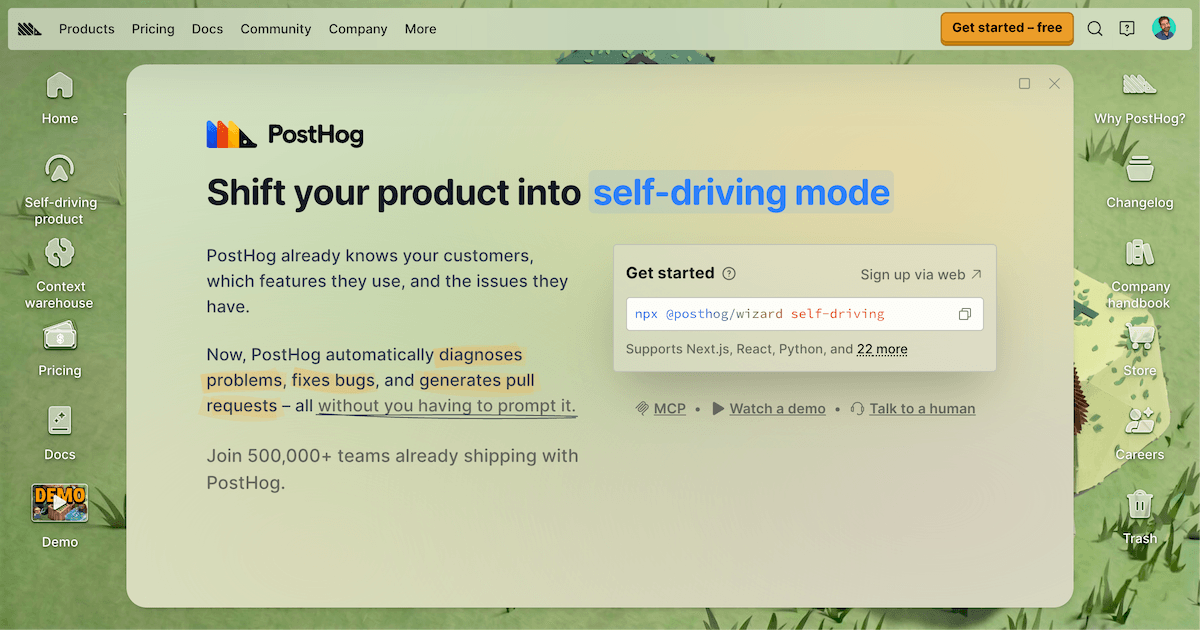
PostHog is pushing session replay beyond observation. Its new Replay Vision feature scans recordings for signs of user frustration, identifies problematic interactions and can open a pull request intended to fix them.
The company described the workflow in an announcement on LinkedIn on August 6. The pitch is straightforward: instead of expecting a product manager or founder to watch hours of session recordings, a scanner reviews them, locates friction and turns what it finds into proposed code changes.
That closes a gap that has long limited session replay tools. Recordings can reveal problems that aggregate metrics miss, but their value depends on someone having enough time to watch, interpret and act on them. Small teams rarely have that capacity.
From Playback to Pull Request
Replay Vision focuses on signals including rage clicks and dead ends. Rage clicks generally indicate that a user repeatedly selected an element without getting the expected response. Dead ends are moments where a user appears unable to continue through a journey, although PostHog has not published the precise criteria Replay Vision uses to classify either behavior.
The announced process has three operational steps:
- A team points a Replay Vision scanner at its session recordings.
- The scanner detects problematic interactions and opens a pull request with a proposed fix.
- The team reviews and merges the change, then repeats the process as new recordings arrive.
The pull request is the consequential part. Automated summaries can reduce the time required to understand a recording, but a proposed code change moves the system into implementation. PostHog has previously introduced AI session summarization for manual churn analysis. Replay Vision extends that direction by connecting observed behavior to a potential remedy.
Important technical details remain undisclosed. The announcement does not explain how Replay Vision selects recordings, how many sessions it considers before identifying a pattern, which repositories or development environments it supports, or how it verifies that a generated fix addresses the original issue. PostHog also has not said whether scanners can be limited to specific pages, cohorts or journeys.
What It Means for Small Product Teams
For a founder or lean product team, the immediate benefit is triage. A scanner could surface a broken button, confusing flow or blocked conversion path without requiring the team to manually sift through every replay. Opening a pull request also gives developers a concrete artifact to inspect, rather than another dashboard alert that still needs diagnosis.
Replay Vision should not be interpreted as fully autonomous product development, despite PostHog’s characterization of the resulting product as “self-driving.” The workflow described by the company still includes a merge step. Teams will need to review the proposed change, assess security and accessibility implications, run tests and decide whether the observed behavior reflects a genuine defect or an unusual user action.
False positives will be a key practical test. Repeated clicks can indicate frustration, but they can also come from impatient users, slow networks or interfaces where repeated interaction is expected. Likewise, a dead end may be intentional, such as the completion screen at the end of a form. The quality of Replay Vision will depend on whether it can distinguish isolated behavior from recurring product friction.
The release fits PostHog’s broader effort to convert product data into executable work. On the same date, its public changelog described improvements that let feedback become context for later work by its “scouts,” another part of the company’s self-driving product initiative. PostHog has also been reducing setup work through one-click Pocket Guides.
Pricing, plan requirements and rollout details were not included in the Replay Vision announcement. Teams considering it should also wait for documentation on repository permissions, data handling and safeguards around automatically generated pull requests.
Frequently asked questions
What is PostHog Replay Vision?
Replay Vision is a PostHog feature that automatically analyzes session recordings for user-frustration signals such as rage clicks and dead ends. It can then open a pull request proposing a fix for the detected issue.
Does Replay Vision make changes without human review?
PostHog’s announced workflow includes opening a pull request and then merging it. That means a team can review the proposed code before it reaches production; the announcement does not describe automatic deployment or verification.
How much does Replay Vision cost?
PostHog did not provide pricing or plan requirements in the announcement. It also did not specify rollout limits, supported repositories or whether the feature requires a separate product tier.
Sources
1 checkedHow we cover tool news: Create With's tool desk drafts these reports with AI from the sources listed above and checks them against those sources before publishing.





 ElevenLabs

 Glide

 Stripe